
Working on the outside of your home often means reaching high places, and that’s where scaffolding becomes necessary. Scaffolding provides a stable, secure platform that lets you safely complete projects on upper floors, roofs, and other tall areas of your property. Ladders might work for quick jobs, but they simply can’t match the safety and convenience that proper scaffolding offers for larger tasks.
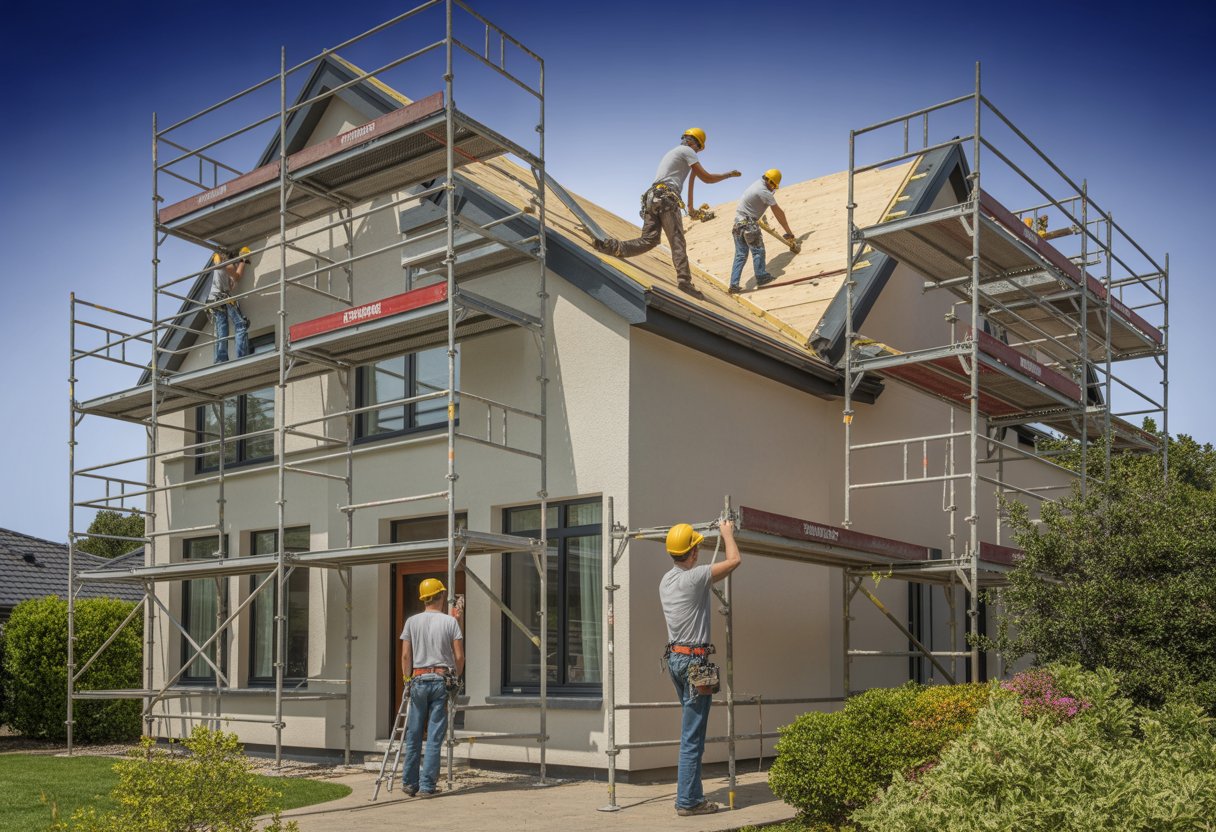
Many common home improvements require working at height for extended periods. Projects like roof repairs, painting exterior walls, replacing gutters, and installing solar panels all need a stable work area. Without the right setup, these jobs become dangerous and difficult to complete properly.
This guide covers the most common projects that need scaffolding and explains why it matters for each one. You’ll learn about different scaffolding options and how to use them safely, helping you plan your next home improvement project with confidence.
Why Scaffolding Is Essential for Home Improvement Projects
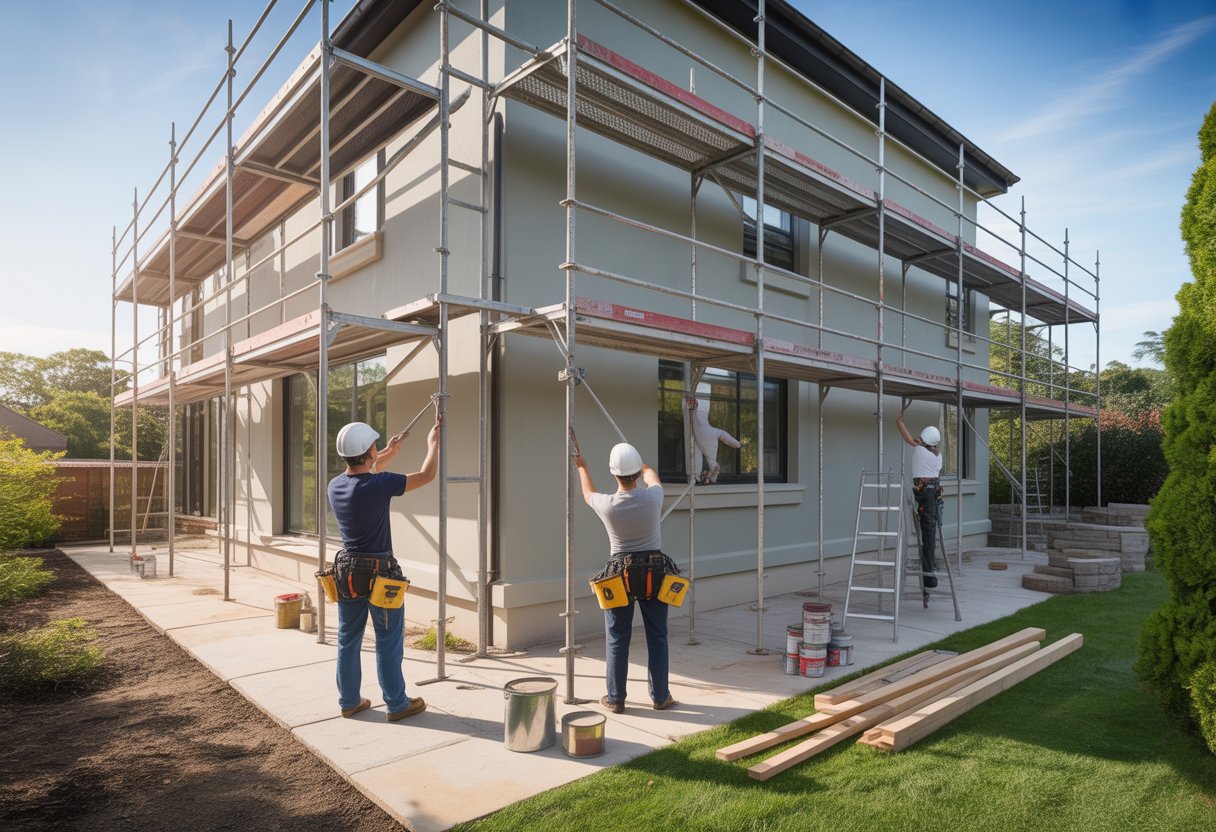
Scaffolding provides stable access to elevated work areas whilst protecting both workers and property. The right equipment makes difficult jobs safer and more efficient compared to makeshift solutions.
Benefits of Using Scaffolding
Scaffolding creates a stable platform that lets you work at height for extended periods. You can move freely across the structure and keep your tools and materials within easy reach.
The framework supports multiple workers at once. This means you can complete projects faster because everyone has proper access to the work area.
Key advantages include:
- Increased efficiency – You spend less time climbing up and down
- Better work quality – A steady platform helps you work with greater precision
- Material storage – You can keep supplies at the working height
- Flexibility – The structure adapts to different building shapes and heights
Scaffolding also protects your property. The framework includes boards and netting that catch falling debris and prevent damage to your home’s exterior, windows, and landscaping.
Health and Safety Considerations
Working at height is one of the most dangerous aspects of home improvement. Scaffolding provides guardrails, toe boards, and secure platforms that prevent falls.
You need both hands free to work properly on many projects. Scaffolding gives you this freedom because you’re not clinging to a ladder. This reduces muscle strain and fatigue during long jobs.
Professional scaffolding meets safety standards that specify load capacities and structural requirements. The platforms must support workers, tools, and materials without risk of collapse.
Weather protection is another safety factor. You can attach sheeting to scaffolding to create shelter from wind and rain, making work conditions safer and more comfortable.
Comparing Ladders and Scaffolding
Ladders work for quick tasks but become dangerous for extended projects. You can only reach a limited area from each ladder position, and repositioning wastes time.
| Feature | Ladder | Scaffolding |
|---|---|---|
| Stability | Limited base support | Full platform with guardrails |
| Work duration | Short tasks only | All-day projects |
| Coverage area | Small reach radius | Wide horizontal access |
| Tool storage | Awkward or impossible | Dedicated platform space |
| Worker capacity | One person | Multiple workers |
Scaffolding costs more initially but proves more economical for substantial projects. You avoid the constant climbing that slows work and increases accident risk. For jobs lasting more than a few hours or covering large areas, scaffolding is the practical choice.
Top 7 Home Improvement Projects That Require Scaffolding
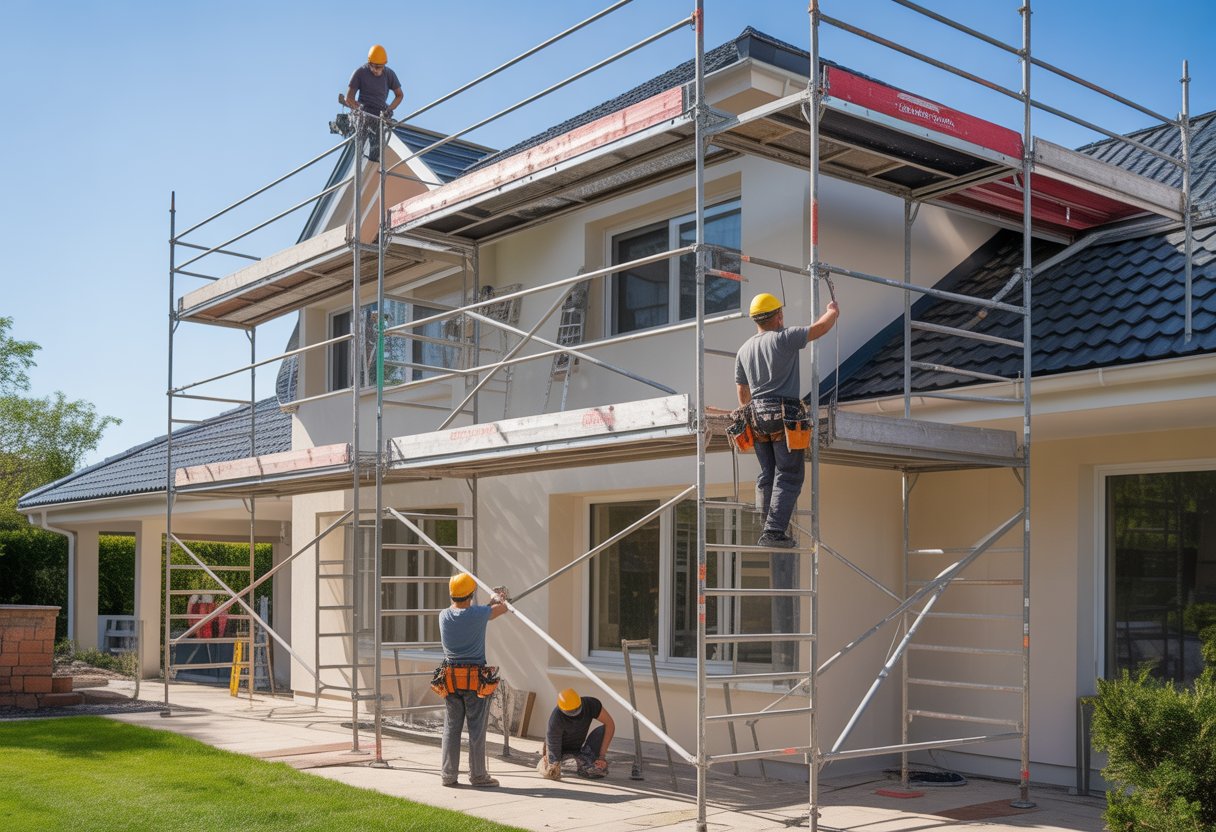
Working at height safely requires proper equipment and planning. Scaffolding provides stable access for projects that involve reaching high areas of your home’s exterior, from painting walls to replacing gutters.
Exterior House Painting
Painting the outside of a two-storey home requires scaffolding to reach upper walls safely. Ladders only provide access to small sections at a time, which creates uneven paint application and requires constant repositioning.
Scaffolding gives you a stable platform to work from for extended periods. You can move freely along the structure whilst carrying paint tins and tools. This setup allows you to maintain a consistent painting technique across large wall sections.
Key benefits for painting projects:
- Stable platform for cutting in around windows and eaves
- Space to store paint supplies within arm’s reach
- Safe access for preparing surfaces before painting
- Better control for detailed trim work at height
Most exterior painting jobs take several days to complete. Scaffolding reduces fatigue because you’re working from a solid surface rather than balancing on ladder rungs.
Roof Repairs and Installation
Roof work demands secure access to your home’s highest point. Scaffolding provides safe access to the roof edge and creates a working platform for materials and tools.
You’ll need scaffolding for tasks like replacing damaged tiles, fixing flashing around chimneys, or installing new roofing materials. The structure supports the weight of both workers and heavy materials like tile bundles or solar panels.
Roof scaffolding typically extends above the roof line with guard rails. This prevents falls whilst you’re working near the edge. The platform also gives you space to organise materials before lifting them onto the roof surface.
Gutter Cleaning and Replacement
Gutters run along your roof’s edge at heights that make ladder work risky. Scaffolding lets you access the entire gutter system safely whilst keeping both hands free to work.
Cleaning gutters from scaffolding is faster than using ladders. You can work along several metres of guttering without climbing down and repositioning equipment. This matters during replacement projects where you need to remove old sections and fit new ones precisely.
Tasks that benefit from scaffolding:
- Removing blocked debris and leaves
- Checking downpipe connections
- Replacing damaged gutter sections
- Fitting new brackets and supports
The stable platform prevents the wobbling that occurs with ladders, which makes it easier to handle long gutter sections during installation.
Window Replacement on Upper Floors
Replacing windows on upper floors requires stable access from outside. Scaffolding provides a secure platform at the exact height of each window, which you need when removing old frames and installing new ones.
Window replacement involves carrying heavy glass units and manoeuvring them into openings. You need both hands free and solid footing to position frames accurately. Scaffolding gives you the space to set down tools and materials whilst you work.
The platform extends beyond the window opening, allowing you to work on the surrounding brickwork or rendering. You can also install window sills, apply sealant, and check that frames are level without reaching awkwardly from a ladder.
Additional Projects That Benefit from Scaffolding
Scaffolding proves essential for several overlooked home projects that involve working at height. These tasks require stable platforms to ensure both safety and quality results.
Chimney Repairs and Maintenance
Your chimney needs regular attention to stay safe and functional. Working on a chimney requires you to reach considerable heights whilst handling heavy materials like bricks and mortar.
Scaffolding provides a secure workspace around the entire chimney structure. You can move freely around all sides without repositioning ladders multiple times. This access is vital when you need to repoint mortar joints, replace damaged bricks, or install new chimney pots.
Common chimney tasks requiring scaffolding:
- Repointing brickwork
- Replacing cracked or missing bricks
- Installing or repairing chimney caps
- Flashing repairs where the chimney meets the roof
- Removing or rebuilding deteriorated sections
The stable platform lets you work with both hands free. You can safely carry tools and materials without worrying about balance.
Soffit and Fascia Work
Soffits and fascias sit at the roofline where your walls meet the roof edge. These components protect your roof structure from weather damage and provide ventilation for your loft space.
Scaffolding gives you proper access to these awkward areas that sit too high for ladders but too low to work from the roof itself. You need steady footing when removing old boards, measuring, cutting, and fitting new materials. The work often requires you to hold boards in place whilst securing them, which demands a stable platform.
Scaffolding also protects the areas below your work zone. When you remove old fascia boards or soffits, debris can fall. The scaffold decking catches falling materials and keeps your garden and pathways safe.
Installing Solar Panels
Solar panel installation requires precise positioning and secure mounting on your roof. You need to attach mounting brackets, run cables, and position heavy panels accurately.
A scaffold platform provides the stable base you need for this technical work. You can lay out multiple panels, check alignments, and make adjustments safely. The installation team needs space to move equipment and panels without rushing or making dangerous reaches.
The scaffolding also protects your roof tiles during installation. Workers can move across the scaffold instead of walking directly on your roof surface, reducing the risk of damage to existing tiles.
Choosing the Right Scaffolding for Your Project
Selecting scaffolding involves understanding the different types available, matching the structure to your project’s scale, and deciding whether to hire or buy equipment based on your specific needs and budget.
Types of Scaffolding Commonly Used
Frame scaffolding is the most common choice for home projects. It uses a basic framework of metal tubes and works well for straightforward tasks like painting or gutter work. You can set it up quickly and it’s relatively affordable to hire.
Tower scaffolding gives you a mobile platform that you can move around your property. This type suits projects where you need to work at multiple spots along a wall or building face. The wheels lock in place for safety whilst you work.
Mobile aluminium towers are lightweight and easy to assemble without professional help. These work best for interior projects or exterior work on single-storey homes. They’re stable enough for most residential tasks but have lower weight limits than steel options.
Traditional tube and fitting scaffolding offers the most flexibility for complex projects. A professional builds it to fit your exact requirements, including awkward corners or uneven ground. This type handles the heaviest loads and works for multi-storey projects.
Project Size and Scaffold Selection
Small projects under 3 metres high typically need only a basic tower scaffold or ladder system. Mid-sized projects between 3-6 metres require standard frame scaffolding with proper platforms and guard rails.
Large projects over 6 metres or those covering multiple building faces need professional scaffolding installation. You must consider the weight of workers, tools, and materials when calculating load requirements. Most residential scaffolding supports 225 kg per platform, whilst heavy-duty options handle up to 450 kg.
Your ground conditions affect scaffold choice too. Soft or uneven ground requires base plates and adjustable legs to ensure stability.
Hiring Versus Purchasing Scaffolding
Hiring scaffolding makes sense for one-off projects lasting a few weeks. Rental costs typically range from £100-£300 per week depending on size and type. This option includes delivery, collection, and sometimes installation.
Purchasing equipment only becomes cost-effective if you plan multiple projects over several years. Basic tower scaffolds start around £400-£800, whilst larger systems cost £2,000 or more. You’ll need storage space and must maintain the equipment properly.
Consider hiring with professional installation for projects above single-storey height. The installer ensures compliance with safety standards and takes responsibility for structural integrity. This typically adds £200-£500 to your costs but reduces liability risks significantly.
Safety Tips and Best Practices When Using Scaffolding
Scaffolding accidents are preventable when you follow proper safety procedures and understand the requirements for inspection, assembly, and legal compliance. Workers must know how to identify hazards, maintain equipment correctly, and follow regulations that protect everyone on site.
Inspection and Maintenance
You must inspect scaffolding thoroughly before each use. Check that the base is secured and properly levelled on stable ground. Look for damaged components including bent frames, cracked boards, or worn connections that could fail under load.
Examine all guardrails, platforms, and access points to ensure they’re intact. Missing or loose parts must be replaced or tightened immediately. Check that planking is secure and free from cracks, splits, or holes.
Scaffolds with a height to base width ratio exceeding 4:1 require restraints through guying, tying, or bracing. This prevents tipping during use. Inspect these restraints regularly for proper tension and secure attachment points.
Maintain your scaffolding by cleaning debris from platforms and replacing worn components before they become dangerous. Keep inspection records that document what you checked and any issues you found. Regular maintenance prevents small problems from becoming serious safety hazards.
Safe Assembly and Disassembly
Only trained and competent persons should assemble or disassemble scaffolding structures. Follow the manufacturer’s instructions exactly and never improvise or skip steps. Incorrect assembly is a leading cause of scaffold failures.
Use fall protection during assembly and disassembly work. Install guardrails as soon as platforms are placed. Secure all components properly and ensure cross-bracing is correctly positioned before moving to the next level.
Never overload scaffolding platforms. Follow the specified load capacity guidelines for both materials and workers. Distribute weight evenly across platforms and avoid concentrating heavy loads in one area.
Wear proper personal protective equipment including hard hats and sturdy, non-skid boots. Use tool lanyards to prevent tools from falling and injuring people below. Erect scaffolding away from power lines and other overhead hazards.
Legal Regulations and Compliance
You must comply with health and safety regulations that govern scaffolding use in your area. These regulations specify requirements for design, inspection, and safe working practices. Failure to comply can result in prosecution and serious injuries.
Ensure you have proper training certificates and competency documentation for workers who erect, alter, or inspect scaffolding. Employers are legally responsible for providing adequate training and supervision.
Display load capacity information clearly on each scaffold. Keep records of inspections, modifications, and any incidents that occur. These records demonstrate compliance and help identify recurring problems that need addressing.
Frequently Asked Questions
Scaffolding raises important questions about safety protocols, practical benefits, and specific applications for different types of home improvement work. Understanding these aspects helps you make informed decisions about your renovation projects.
What are the essential safety considerations when using scaffolding for home renovation?
You must ensure your scaffolding sits on stable, level ground with proper base plates or sole boards. The structure needs to be tied to the building at regular intervals to prevent movement or collapse.
Guard rails are required on all working platforms to prevent falls. You should never overload platforms with materials or equipment beyond their weight capacity.
Regular inspections are mandatory, especially after adverse weather conditions. Any damaged or loose components must be repaired or replaced immediately before work continues.
How does scaffolding improve efficiency in exterior house painting jobs?
Scaffolding provides a stable platform that lets you move freely along the entire wall surface without constant repositioning. You can set up paint supplies, brushes, and equipment at arm’s reach whilst maintaining both hands free for detailed work.
The continuous working surface eliminates the time wasted climbing up and down ladders. You can paint larger sections in single sessions, which creates more uniform finishes and better colour consistency.
Multiple workers can operate on different platform levels simultaneously. This parallel workflow significantly reduces the overall project timeline compared to ladder-based approaches.
Why is scaffolding critical for successful roof repair or replacement projects?
Roof work requires both hands free for handling tiles, tools, and materials safely. Scaffolding provides the stable base and edge protection that ladders cannot offer for extended roofing tasks.
You gain safe access to the entire roof perimeter without awkward reaching or stretching. The platforms let you stage materials at roof level, which reduces dangerous trips up and down whilst carrying heavy items.
The structure protects you from falls at height, which are the leading cause of serious injuries in roofing work. Guard rails and toe boards prevent tools and materials from falling onto people or property below.
Can you explain the benefits of using scaffolding for gutter maintenance and installation?
Scaffolding positions you at the perfect height to work comfortably on guttering without overstretching. You can maintain proper posture whilst fitting brackets, sealing joints, and ensuring correct fall angles for drainage.
The stable platform lets you carry sections of guttering along the roofline safely. You avoid the wobbling and limited reach that make gutter work from ladders both difficult and dangerous.
You can inspect and repair multiple sections without repeatedly moving equipment. This continuous access speeds up cleaning, repairs, and replacement work considerably.
In what ways does scaffolding support complex masonry work on residential properties?
Masonry requires heavy materials like bricks, blocks, and mortar to be accessible at working height. Scaffolding platforms can safely hold the weight of these materials alongside your tools and equipment.
You need both hands free for precise bricklaying, pointing, and stone work. The stable working surface lets you focus on craftsmanship rather than balancing on unstable supports.
Scaffolding provides access to large wall sections for extended periods. This is essential for maintaining consistent mortar colour and achieving uniform joint finishes across the entire project.
What advantages does scaffolding provide during window fitting or upgrades?
Window installation demands precise positioning and secure handling of heavy glass units. Scaffolding gives you a stable platform at the exact height needed for accurate fitting and alignment.
You can safely remove old windows and install new frames without juggling tools whilst balancing on a ladder. The platforms provide space to stage multiple window units, reducing trips and installation time.
External scaffolding lets you work on the outside whilst a colleague assists from inside. This coordinated approach ensures proper sealing, insulation, and finishing on both sides of the window opening.
Need Professional Scaffolding for Your Project?
Contact us now:


