
Construction delays and unexpected costs can quickly derail any building project. Every day lost on site means more money spent on labour, equipment hire, and extended project timelines. The good news is that many of these issues can be prevented with the right approach to scaffolding.

Professional scaffolding installation can reduce project delays, lower overall costs, and create a safer work environment that keeps your build running smoothly. When experts handle your scaffolding needs, you get properly designed systems that give workers efficient access to all work areas. This means fewer interruptions, better workflow, and less time wasted on unsafe or poorly planned setups.
Your choice of scaffolding affects more than just access to higher levels. It impacts worker productivity, site safety, material handling, and how quickly you can complete different phases of construction. Understanding how professional scaffolding services deliver real savings helps you make smarter decisions for your project.
Key Ways Professional Scaffolding Saves Time and Money
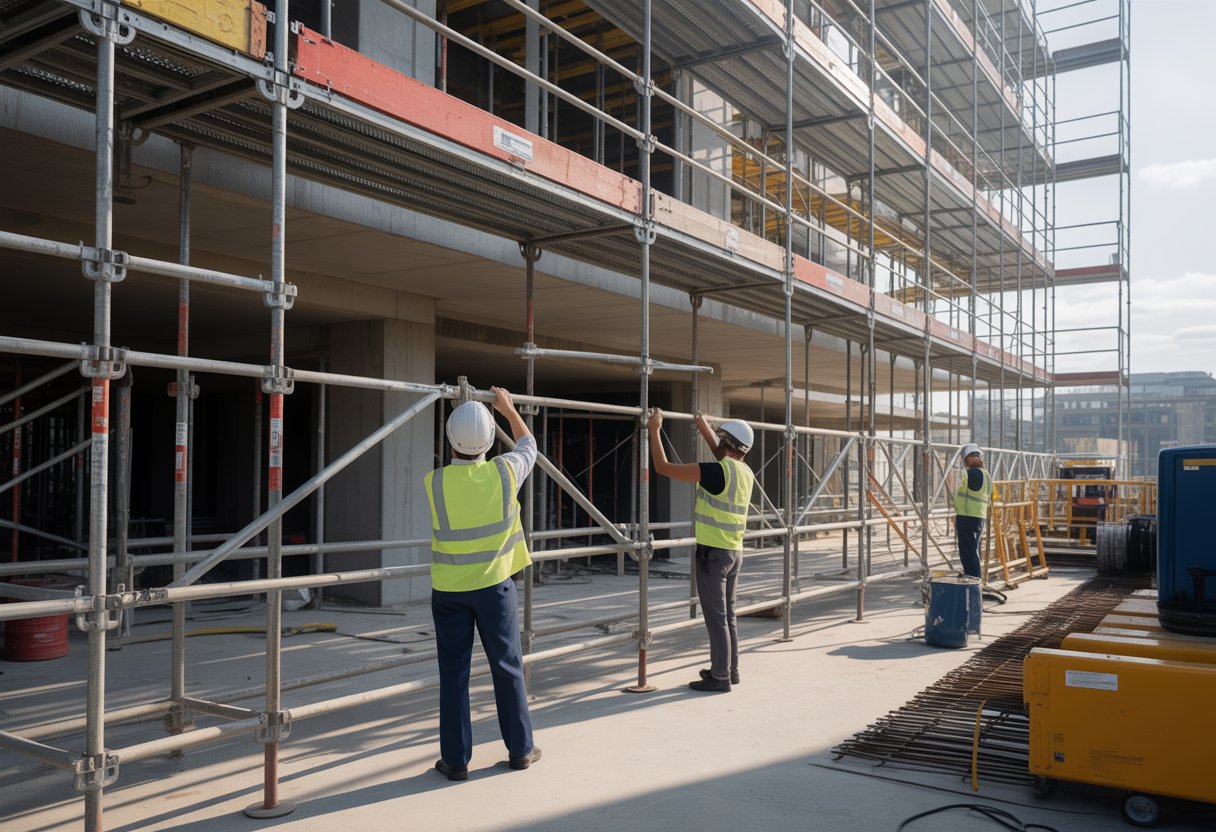
Professional scaffolding companies deliver measurable value through expert installation, strategic planning, and efficient resource management. These advantages translate directly into reduced project timelines and lower overall costs for your building site.
Enhanced Project Efficiency
Professional scaffolding services speed up your construction timeline through rapid, correct installation. Experienced teams can erect scaffolding systems in a fraction of the time it would take inexperienced workers, often completing setups in hours rather than days.
You gain immediate access to properly configured work platforms that suit your specific project requirements. Professional scaffolding companies use proven techniques and modern equipment to ensure structures are ready when your trades need them.
Key efficiency benefits include:
- Faster assembly and dismantling times
- Optimal placement for multiple trades to work simultaneously
- Pre-planned configurations that eliminate trial and error
- Quick adjustments as project needs change
Your workers can focus on their core tasks rather than struggling with scaffolding setup. This division of labour means skilled tradespeople spend their time on specialised work, not on assembling temporary structures they may not fully understand.
Minimising Delays Through Expert Planning
Scaffolding companies assess your site requirements before installation begins. This planning prevents common issues that cause project delays, such as incorrect sizing, poor access routes, or unstable ground conditions.
Expert planners identify potential problems early. They account for factors like uneven terrain, overhead obstacles, and weight-bearing requirements that inexperienced installers might miss.
You avoid costly work stoppages when scaffolding is installed correctly the first time. Poorly assembled structures require dismantling and rebuilding, which halts all work at height and pushes back your completion dates.
Professional teams coordinate with your project schedule to ensure scaffolding arrives and is erected exactly when needed. This timing eliminates expensive waiting periods where workers stand idle or where you pay for scaffolding rental whilst it sits unused.
Reducing Labour and Overhead Costs
Hiring professional scaffolding eliminates the need to train your own staff in complex assembly procedures. You avoid the liability of having untrained workers build potentially unsafe structures.
Your labour budget decreases when specialists handle scaffolding tasks. A professional crew of two or three can complete installations that might require five or more of your general labourers working longer hours.
Cost reductions extend to:
- Lower insurance premiums through reduced accident risk
- No equipment purchase or maintenance expenses
- Fewer worker compensation claims
- Reduced project management time overseeing scaffolding tasks
Professional scaffolding services include regular inspections and maintenance. This ongoing oversight prevents structural failures that could cause injuries, property damage, or expensive legal issues. You pay a predictable fee rather than absorbing unpredictable costs from accidents or equipment failures.
The Importance of Expert Scaffold Design and Installation

Professional scaffold design and installation directly affect how quickly work progresses and how much you spend on materials and labour. Proper planning prevents costly mistakes and ensures your site runs efficiently from start to finish.
Tailored Scaffold Solutions for Every Site
Every building site has unique requirements that demand specific scaffolding solutions. A scaffold designer must assess your site location, the time period you need the structure in place, the intended use, and the height and length requirements before creating a plan.
Key information for accurate scaffold design includes:
- Site-specific dimensions and access points
- Number of boarded lifts needed
- Load requirements for materials and workers
- Environmental factors affecting stability
Standard scaffolding approaches rarely work for complex projects. You might need access towers for tight spaces, temporary roofs for weather protection, or custom configurations for irregular building shapes. A qualified designer considers these factors during the planning process to create a system that fits your exact needs.
Bespoke scaffolding design prevents the need for modifications during installation. This saves time because workers don’t need to dismantle and rebuild sections that don’t fit properly.
Role of Qualified Scaffolders
Qualified scaffolders bring technical knowledge that ensures structural integrity throughout installation. They understand load calculations, bracing requirements, and safety regulations that govern scaffolding systems.
Professional installation reduces the risk of accidents and project shutdowns. Scaffolders trained to industry standards know how to secure platforms properly, install guardrails correctly, and create stable foundations on uneven ground.
You benefit from faster installation times when experienced teams handle the work. They recognise potential problems early and adjust the setup before issues cause delays. Their expertise also means less supervision required from your site management team.
Proper installation supports materials and tools safely. The structure must carry the weight of workers, equipment, and building supplies without compromising stability. Only qualified professionals can guarantee this level of safety and functionality.
Ensuring Optimised Material Use
Expert scaffold design eliminates material waste through precise calculations. Designers determine exactly how many tubes, fittings, and boards you need before ordering supplies.
Accurate planning prevents over-ordering, which ties up your budget in unused materials. It also avoids under-ordering, which causes work stoppages whilst you wait for additional supplies to arrive.
High-quality scaffolding systems designed by professionals use components efficiently. Each element serves a specific purpose, and nothing gets included that doesn’t contribute to the structure’s function or safety.
Material optimisation extends to reusing components across different project phases. A well-planned scaffolding design accounts for how you can adapt the structure as work progresses, maximising the value you get from each piece of equipment.
Choosing the Right Scaffolding Materials and Systems
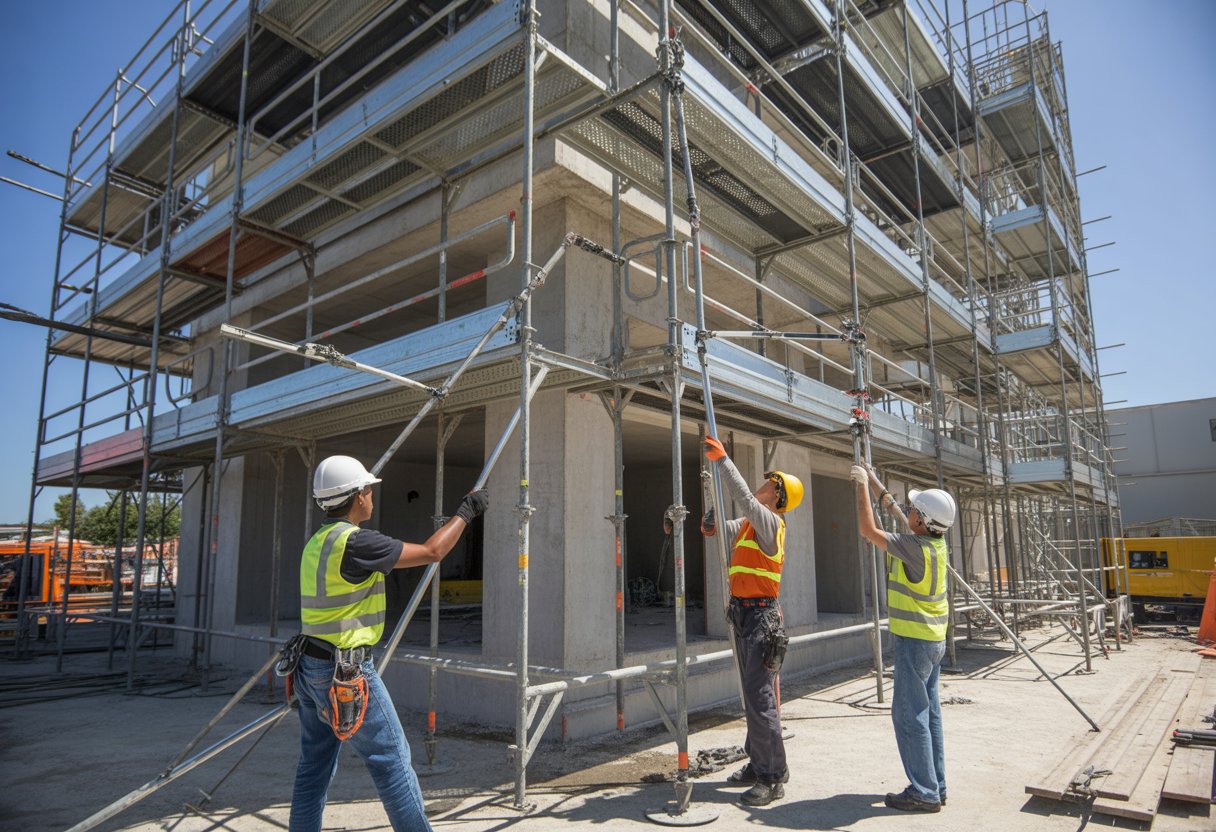
The materials and systems you select directly affect how quickly your team works and how much you spend on your project. Better materials reduce repair costs and prevent delays, whilst properly engineered systems match your specific site requirements.
Advantages of High-Quality Materials
High-quality scaffolding materials last longer and require less maintenance during your project. Steel tubes and aluminium components resist wear better than cheaper alternatives, which means fewer replacements and less downtime on your building site.
Quality materials also handle heavier loads more safely. When you invest in properly manufactured components, your scaffolding can support more workers and equipment at once. This reduces the number of times your team needs to reposition the structure.
Better materials save you money through reduced hire periods. Strong, well-maintained scaffolding materials rarely fail inspections or need emergency repairs. Your project stays on schedule without unexpected costs from equipment failures.
Durable components also perform better in harsh weather. Rain, wind and temperature changes affect cheap materials more quickly, leading to rust and structural weakness. Premium scaffolding materials maintain their integrity throughout your project timeline.
Selecting Suitably Engineered Scaffolding Types
Tube and fitting scaffolding offers the most flexibility for complex building shapes. You can adjust this system to fit around unusual corners and structures. It works well for renovation projects where standard frames won’t fit.
Cantilever scaffolds suit buildings where you cannot anchor to the ground. These systems extend outward from a single support point, making them ideal for working over obstacles or near roads. They require careful engineering but save space on crowded sites.
Stair towers provide safe access between levels on multi-storey projects. These purpose-built structures eliminate the safety risks of ladders and speed up worker movement. Your team wastes less time climbing and can carry tools more safely.
Mobile scaffolding works best for tasks that cover large areas. These wheeled systems move quickly along walls or facades. You save labour hours by repositioning the structure instead of dismantling and rebuilding it.
Understanding Temporary Structure Options
Independent scaffolding stands alone without building support. This option suits new construction where walls cannot bear weight yet. It costs more initially but provides stable access from day one of your project.
Dependent scaffolding ties into the existing structure. It uses less material than independent systems, which lowers your hire costs. This works well for repairs and renovations on established buildings.
Scaffolding solutions for complex projects often combine multiple systems. You might need tube and fitting for curved sections alongside standard frames for straight walls. Your scaffolding provider can design hybrid systems that meet all your access requirements whilst minimising total costs.
Suspended scaffolding hangs from roof structures or beams. This suits high-rise work where ground-based systems become impractical. It requires specialised equipment but eliminates the expense of extremely tall tower structures.
Professional vs DIY Scaffolding: Risks and Rewards
DIY scaffolding might appear to save money upfront, but nearly 40% of DIY projects in the UK end up costing more than hiring a professional scaffolding company. The choice between erecting your own structure or using professional scaffolding affects your safety, budget, and project timeline.
Common Pitfalls of DIY Setups
When you attempt DIY scaffolding, you face several critical challenges that professionals avoid through training and experience. The most serious risk is improper assembly, which leads to structural instability and potential collapse.
Falls from height remain the leading cause of serious injuries on construction sites. Without proper training, you may not recognise structural weaknesses or understand load-bearing requirements. You also lack access to regular safety inspections that professional scaffolding companies provide.
Legal compliance presents another major obstacle. Current regulations require specific knowledge of scaffolding standards and safety codes. If you erect scaffolding yourself, you’re personally responsible for meeting these requirements. Insurance coverage often doesn’t extend to DIY scaffolding accidents, leaving you financially exposed if something goes wrong.
Equipment quality matters significantly. Professional companies use tested, certified components that meet British Standards. DIY setups often rely on borrowed or substandard materials that compromise safety.
Comparative Cost Analysis
The initial outlay for DIY scaffolding appears lower, but hidden costs quickly accumulate. You’ll need to hire or purchase equipment, including boards, tubes, clips, and safety gear. Rental fees for scaffolding materials typically run for the entire project duration.
Your time represents a substantial cost. Erecting scaffolding without experience takes considerably longer than professional installation. A professional team completes setup in hours, whilst DIY attempts can take days.
Key cost factors to consider:
- Equipment hire or purchase
- Your labour time
- Potential mistakes requiring dismantling and rebuilding
- Insurance gaps
- Compliance certification fees
Professional scaffolding services provide transparent pricing that includes all necessary components, installation, inspections, and removal. Multiple quotes from different companies help you find competitive rates whilst ensuring quality standards.
Long-Term Value and Safety Considerations
Professional scaffolding delivers value beyond initial installation. Regular inspections ensure ongoing safety throughout your project. Professionals adjust structures as work progresses and weather conditions change.
Your project efficiency improves dramatically with professional services. You can focus on actual building work rather than managing scaffolding concerns. Professional teams handle modifications quickly when you need access to different areas.
Liability protection offers significant financial security. A professional scaffolding company carries insurance and accepts responsibility for structural integrity. This coverage protects you from accident-related costs and legal claims.
Safety compliance reduces project delays. Inspectors and building control officers recognise professional installations, avoiding stop-work orders that occur with non-compliant DIY setups. The complexity of modern scaffolding construction, combined with strict legal requirements, makes professional expertise essential for most building projects.
Safety Compliance and Reducing Liability
Professional scaffolding services protect your business from legal penalties and financial losses through proper safety compliance. Working with certified scaffolding companies reduces accident risks and keeps insurance costs manageable.
Meeting Regulatory Standards
Your scaffolding installation must comply with the Work at Height Regulations 2005 and Construction Design and Management Regulations 2015. Professional scaffolding companies employ trained operatives who understand these legal requirements and implement them correctly on site.
Certified scaffolders maintain detailed inspection records and conduct regular safety checks. They provide job-specific briefings and toolbox talks to keep workers informed about current safety guidance. This level of documentation proves essential during Health and Safety Executive inspections.
High-quality scaffolding services ensure your structures meet the Scaffolding Code of Practice requirements. Your contractors should hold relevant qualifications and complete ongoing training to stay current with regulation changes. Non-compliance can result in immediate work stoppages, enforcement notices, and substantial fines that halt your project.
Reducing Insurance Costs and Legal Risks
Proper scaffolding installation lowers your insurance premiums by demonstrating effective risk management. Insurers offer better rates when you use certified scaffolding companies because the likelihood of accidents decreases significantly.
Legal liability poses serious financial threats to your building site. One scaffolding-related injury can lead to compensation claims, legal fees, and reputational damage that far exceed the cost of professional services. Your business remains legally responsible for accidents involving non-compliant structures.
Professional scaffolding companies carry their own liability insurance, which provides additional protection for your project. They assume responsibility for the structural integrity and safety of their installations. This arrangement shields your business from claims related to scaffolding failures or improper assembly.
Applications of Professional Scaffolding in Different Project Types
Professional scaffolding services adapt to various building requirements, with commercial scaffolding supporting large-scale industrial work and domestic scaffolding meeting residential needs. Each project type demands specific scaffolding solutions to maximise efficiency and safety.
Commercial and Industrial Projects
Commercial scaffolding handles the demands of large-scale construction sites, warehouses, factories, and office buildings. These projects require robust systems that can support multiple workers and heavy equipment simultaneously.
Key applications include:
- Multi-storey building construction and renovation
- Warehouse maintenance and expansion
- Factory equipment installation
- Retail premises refurbishment
Industrial scaffolding systems provide extensive coverage for complex structures. You’ll find modular systems like ringlock and cuplock scaffolding particularly useful for these projects because they assemble quickly and adapt to various configurations.
Commercial projects often run on tight deadlines. Professional scaffolding services ensure your structure meets all HSE requirements whilst remaining flexible enough to accommodate changing site conditions. The right system reduces assembly time and minimises disruption to ongoing operations.
Domestic and Residential Scaffolding
Domestic scaffolding serves home renovations, extensions, roof repairs, and external maintenance work. These installations typically require less extensive coverage than commercial projects but demand equal attention to safety standards.
Residential scaffolding must fit within confined spaces and cause minimal disruption to neighbours. Scaffolding services for domestic projects often use lightweight aluminium systems or traditional tube and fitting scaffolding that adapts to irregular building shapes.
Common residential applications:
- Roof repairs and chimney work
- Rendering and external painting
- Loft conversions
- Window replacements
- Gutter maintenance
Your domestic scaffolding needs proper access points for tradespeople whilst protecting your property and garden areas. Professional installers configure systems to suit terraced houses, semi-detached properties, and detached homes with varying height requirements.
Frequently Asked Questions
Professional scaffolding raises important questions about costs, safety requirements, and practical benefits that affect your building site operations. Understanding these key areas helps you make informed decisions about scaffolding services.
What are the key benefits of using professional scaffolding for construction projects?
Professional scaffolding provides a stable and secure working platform that allows your workers to perform tasks at various heights safely. You gain access to properly maintained equipment that meets current safety standards without needing to purchase or store it yourself.
Your project timeline becomes more predictable when professionals handle the installation and dismantling. They complete these tasks quickly because they have the training and experience to work efficiently. You also receive expert advice about the best scaffolding configuration for your specific building requirements.
How can scaffolding improve efficiency and safety on a building site?
Well-designed scaffolding creates clear pathways for workers and materials across your site. Your team can move between different levels without constantly repositioning ladders or finding alternative access routes. This reduces wasted time and keeps work flowing smoothly.
Safety improves because scaffolding includes guardrails, toe boards, and secure platforms that prevent falls. Your workers can focus on their tasks rather than worrying about unstable footing. Proper scaffolding also reduces the risk of dropped tools or materials injuring people below.
The structure allows multiple workers to operate at different heights simultaneously. This means you can schedule various trades to work at the same time without creating bottlenecks.
In what ways does scaffolding contribute to reducing overall project costs?
Scaffolding eliminates delays caused by inadequate access to work areas. Your workers complete tasks faster when they have stable platforms and don’t need to spend time setting up temporary solutions. This efficiency translates directly into lower labour costs.
You avoid potential expenses from workplace accidents and injuries. Professional scaffolding meets safety regulations, which protects you from fines and legal issues. The cost of treating injuries and managing accident investigations far exceeds the investment in proper scaffolding.
Equipment damage decreases when workers have secure spaces to operate. Your tools and materials stay organised on scaffolding platforms rather than being moved repeatedly or stored in risky locations.
What considerations should be taken into account when choosing a scaffolding service?
You need to verify that the scaffolding company holds proper insurance and meets industry standards. Check their track record with similar projects and ask for references from previous clients. The company should provide trained scaffolders who understand current regulations.
Consider the company’s ability to deliver and erect scaffolding within your project timeline. You want a provider who can adapt the structure as your building work progresses. Their capacity to conduct regular inspections throughout your project ensures ongoing safety.
Price matters, but the cheapest option often costs more in the long run through poor quality or unreliable service. Look for transparent pricing that includes delivery, installation, inspections, and removal.
How does the initial investment in scaffolding compare with potential savings during construction?
The upfront cost of professional scaffolding typically represents a small percentage of your total project budget. This investment prevents expensive delays that occur when workers lack proper access to their work areas. A single day of project delay often costs more than several weeks of scaffolding hire.
You save money by avoiding the need to purchase scaffolding equipment that requires storage and maintenance. Professional services include regular safety inspections that prevent accidents and associated costs. Your insurance premiums may also be lower when you demonstrate proper safety measures.
The return on investment becomes clear when you calculate reduced labour hours and fewer material losses. Projects completed on schedule avoid penalty clauses and maintain client relationships for future work.
What are the regulations governing the use of scaffolding on construction sites?
The Work at Height Regulations 2005 require you to ensure all work at height is properly planned and carried out by competent people. You must use equipment that is appropriate for the task and maintain it properly. These regulations apply to all scaffolding work regardless of the height or duration.
Scaffolding must be erected, altered, and dismantled by trained and competent workers under the supervision of a qualified person. You need to ensure inspections occur before first use, after alterations, and at least every seven days thereafter. A written inspection report must be completed and kept available.
Your scaffolding must comply with British Standard BS EN 12811-1, which sets requirements for performance and general design. Local authorities may require permits for scaffolding that extends over public footpaths or roads. You remain legally responsible for ensuring all scaffolding on your site meets these standards, even when using hired services.
Need Professional Scaffolding for Your Project?
Contact us now:


