
On modern construction sites, Scaffolding Safety Equipment is not just an overhead expense, it is a direct line of defence, because 72% of scaffolding accidents are caused by just three preventable factors: equipment failure or improper assembly (28%), slipping or tripping (24%), and falling objects (20%).
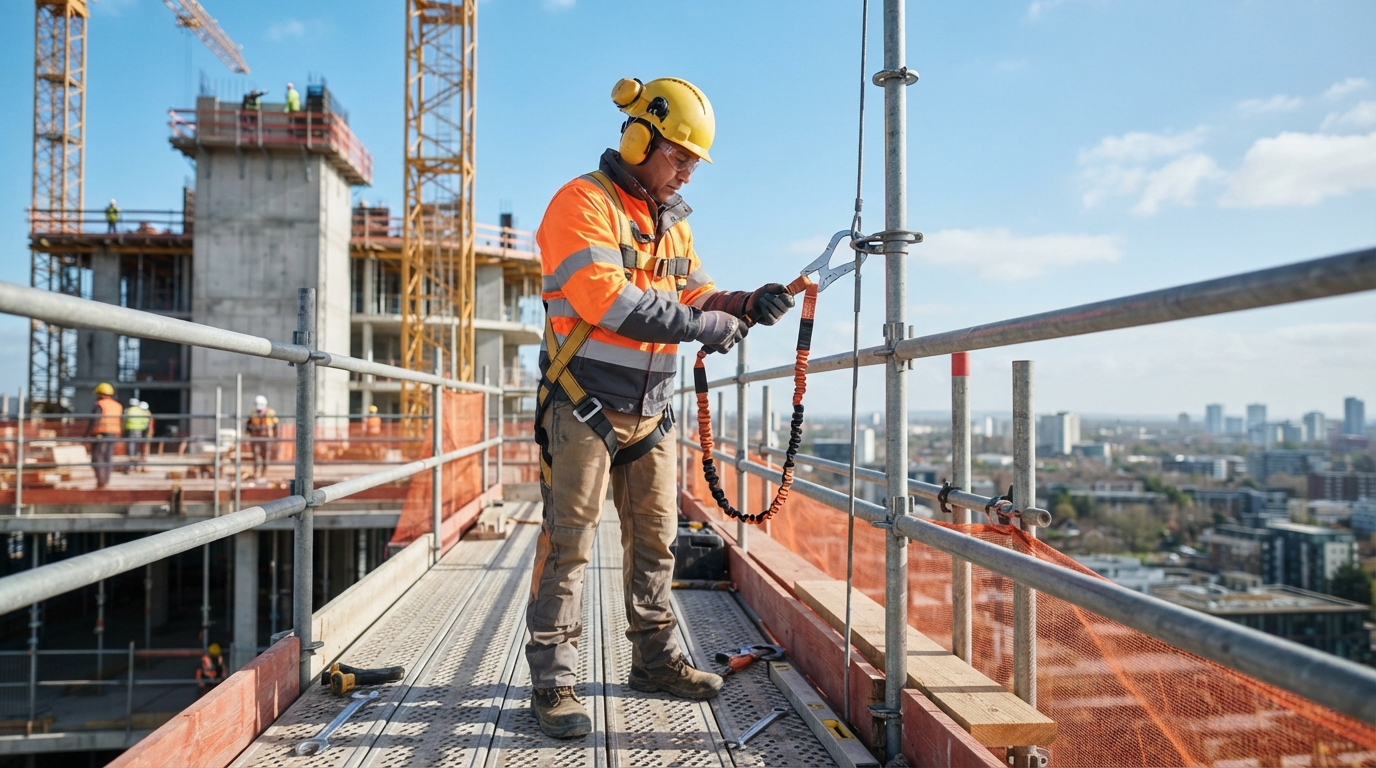
Key Takeaways
| Build safety into the system
Use guardrails, toe boards, and safe access equipment as a complete package, not as “extras”.
|
Plan, inspect, maintain
Many incidents come from simple planning and maintenance gaps, which proper checks and competent personnel help prevent.
|
| Choose the right scaffold type
Failure to select the appropriate scaffold type is a common scaffolding mistake, and it can drive unsafe workarounds.
|
Minimise business interruption
A well-designed scaffold plan supports safe progress while reducing downtime on active sites.
|
- Guardrails and toe boards are essential features that reduce fall risk and stop falling objects on platforms.
- Safe working positions start with correct deck and access planning, not personal improvisation.
- Compliance and safety standards protect people and keep projects moving, especially on larger commercial construction sites.
- If you want to avoid avoidable errors, read 5 Common Scaffolding Mistakes (and How to Avoid Them) and build your checklist around those failure points.
- For commercial projects, our guidance on the role of reliable scaffolding in commercial construction explains how safety features link to project success.
- When planning your next site, consider commercial scaffolding hire so you are not guessing your way into compliance.
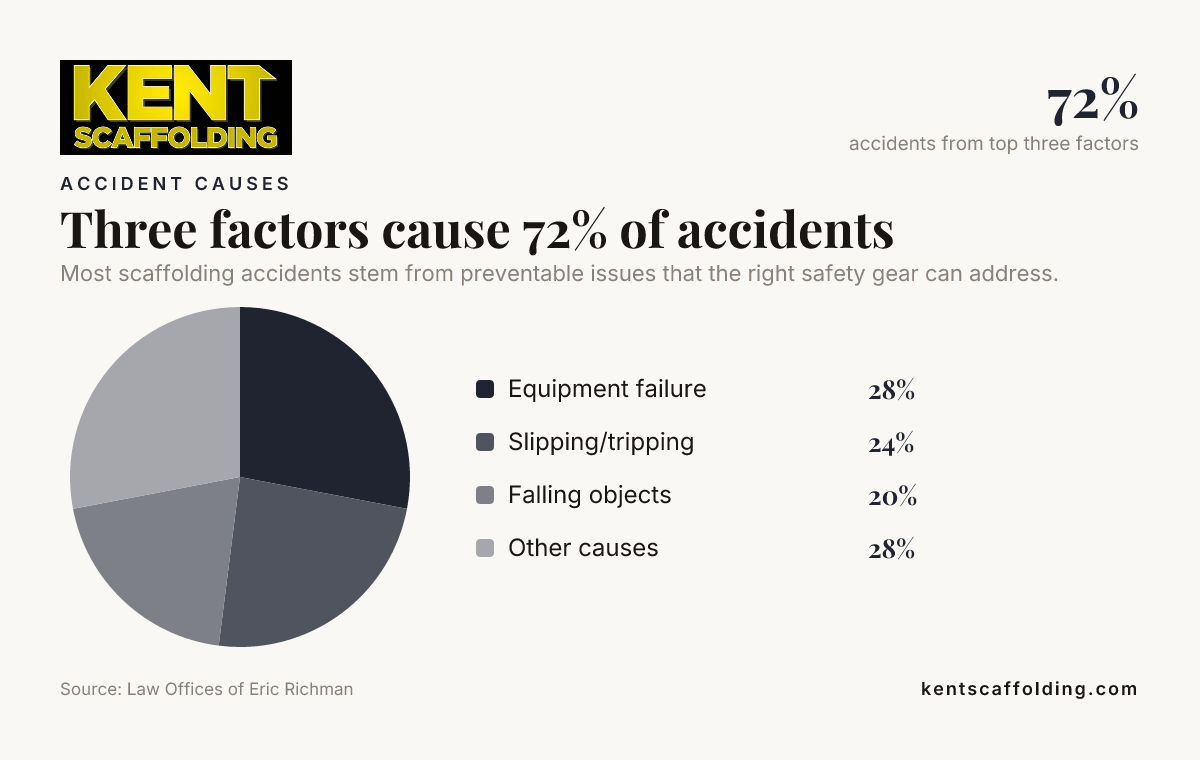 Most scaffolding accidents stem from preventable issues that the right safety gear can address.
Why modern scaffolding safety equipment must be system-led, not job-led
On a modern construction site, Essential Scaffolding Safety means you plan safety as a system, with equipment that supports safe access, safe working, and safe containment of hazards.
We see this most clearly when projects get busy and multiple trades start moving at once. If your scaffolds are sound but your guardrails, toe boards, and access arrangements are inconsistent, the risk pattern changes fast.
We also know why this matters to property managers and developers. With the current push for EPC B compliance, the multi-residential wave it has created represents one of the most significant construction and retrofit challenges facing property managers, developers, and landlords across the UK. That workload makes it even more important that system scaffolds are set up to keep trades moving safely.
Reliability is the foundation for every safety accessory
Commercial construction projects require temporary structures that keep workers safe while allowing them to reach high areas. Reliable scaffolding acts as the backbone of commercial work, directly impacting both safety and timelines.
That is why we treat scaffold selection and installation as safety equipment in its own right. You cannot bolt safety to the end of a project once the work has already started.
If you are supporting a large-scale programme, our article on Understanding the Role of Reliable Scaffolding in Commercial Construction explains how scaffold reliability links to safe working at height.
Guardrails, toe boards, and platform protection you should not compromise
When we talk about Top Essential Scaffolding Safety Equipment for Modern Construction Sites, guardrails and toe boards are usually where the conversation starts, and it should. They are the simplest defence against falls and falling objects, and they help keep working areas controlled.
On platforms, guardrails reduce fall risk from the edge, and toe boards help stop small items and debris dropping onto people below. Both features support safe working position habits, because workers can work within the protected perimeter.
- Guardrails: used to create a protected edge around working decks.
- Toe boards: provide a barrier at the base to reduce falling objects.
- Decking and platform integrity: supports stable footing during normal work, not just during checks.
- Edge protection consistency: means the same standard on every bay, not “good enough” sections.
In practice, we plan these features from the beginning because commercial sites do not tolerate rework. If you need to change access later, you can lose time and increase risk while adjustments are made.
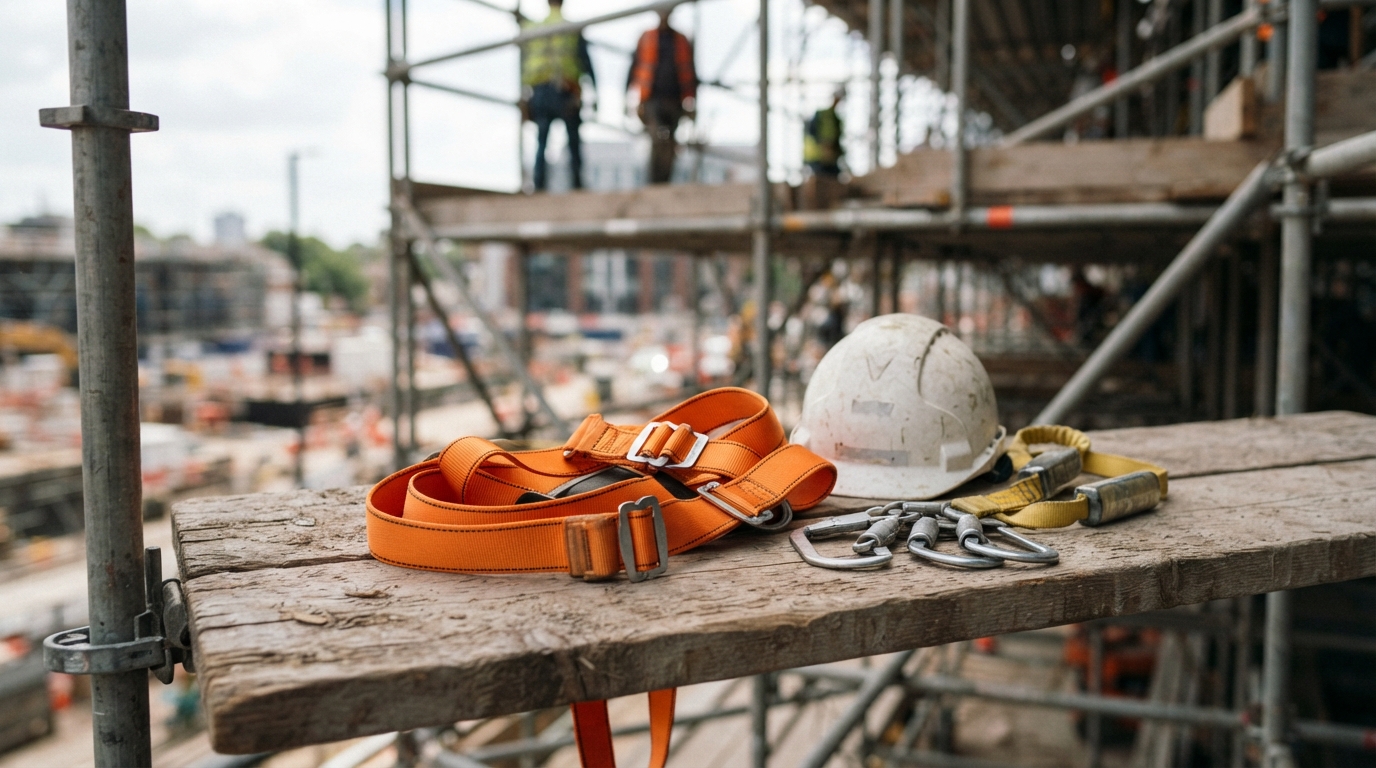
Safe access equipment, including ladders and internal routes
Slip and trip risk sits alongside equipment failure and falling objects as one of the most preventable drivers of scaffolding accidents. That is why Top Essential Scaffolding Safety Equipment for Modern Construction Sites also includes safe access equipment and internal routes that keep movement controlled.
When workers climb, they should be able to do it without stretching, balancing on the edge, or stepping across unsafe gaps. Safe access reduces shortcuts, and it helps maintain a consistent flow of people to and from the work area.
What “safe access” looks like on real sites
- Dedicated access points aligned to the scaffold layout, so people do not wander between levels.
- Stable ladder positioning so steps are consistent and handholds are available.
- Clear routes that avoid clutter and keep fall-risk areas unobstructed.
- Appropriate spacing between decks and landings to reduce awkward stepping.
We often plan access during scaffold design and installation, not after. That is a practical choice when you need the site to stay productive and you want to reduce business interruption.
Fall protection strategy for higher-risk tasks
Even with guardrails and solid platform protection, some tasks require additional fall protection controls. That is where fall protection strategy becomes part of your overall Top Essential Scaffolding Safety Equipment for Modern Construction Sites toolkit.
On scaffolding, fall protection planning means you look beyond “what the scaffold has” and consider the specific work being done, the duration of exposure, and the emergency response needs.
Training and emergency readiness are part of the “equipment” picture
Equipment works best when workers understand how to use it, and when they know what to do if something goes wrong. That includes emergency planning and self-rescue.
For real-world safety, we push teams to keep competency sharp, because small mistakes during planning, assembly, loading, and maintenance are often the difference between a controlled job and a serious incident.
Where we see fall risks increase
- Repositioning for multi-trade work where access changes frequently.
- Unplanned maintenance that shifts the work position mid-task.
- External weather effects that increase slip risk, making edge protection and footing even more critical.
- Heritage and listed building work where constraints require extra care over access paths and fit-off practices.
Whether you manage a block of flats in Maidstone, a row of rental terraces in Dartford, or a purpose-built residential development in Medway, the same principle applies, you must match safety controls to task realities.
Containment equipment for falling objects and site protection
Falling objects are one of the biggest hazards on scaffolded works, and they often come from simple access and housekeeping failures. That is why Top Essential Scaffolding Safety Equipment for Modern Construction Sites includes containment measures that protect people below and keep the work area manageable.
We treat containment as a system, toe boards and platform edges are only one part. You also need sensible controls for what gets stored where, how materials are handled, and how debris is prevented from becoming a hazard.
Key containment controls that reduce falling-object incidents
- Toe boards: stop small items from slipping through the deck edge area.
- Platform edge discipline: keep tools positioned safely, avoid overhang where people below walk.
- Controlled material placement: so loaded areas do not become unstable or create trip hazards.
- Site coordination: align trades so access and handling do not clash on the same level.
On commercial sites, this also supports smoother logistics. When containment is planned, deliveries, maintenance, and construction tasks fit together instead of fighting over the same safety-critical zones.
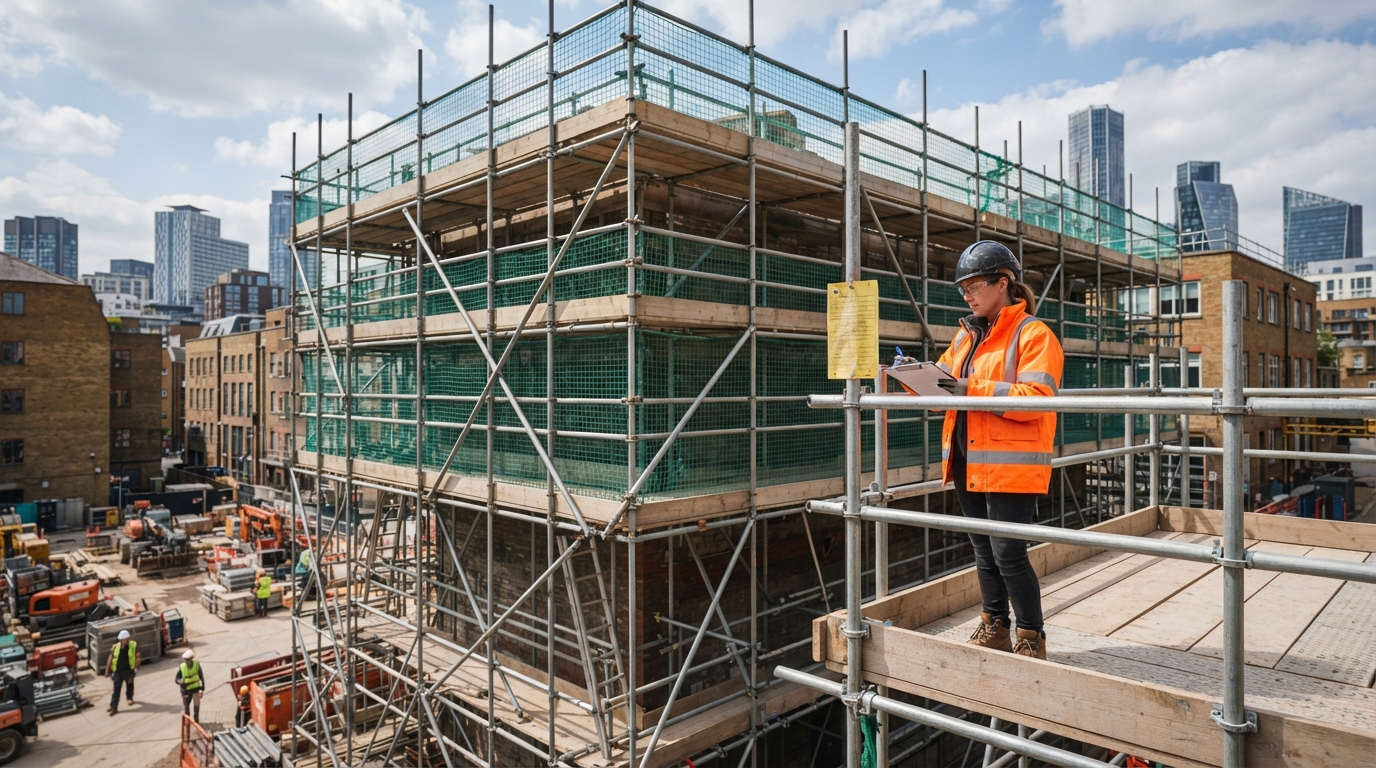
Inspection, maintenance, and competent personnel equipment checks
In modern scaffolding safety, the equipment you use includes the equipment you check. Inspections and maintenance are not “paperwork”, they are the operational part of keeping safety controls effective.
Across Kent sites, we find that many scaffolding safety failures trace back to preventable mistakes in planning, assembly, loading, and maintenance. That means your Essential Scaffolding Safety Equipment plan should always include a robust inspection routine and clear responsibility.
What competent inspections should cover
- Base stability and level checks: failures here undermine the whole scaffold structure.
- Assembly and set-up verification: ensuring correct configuration and safe working platform provision.
- Maintenance over time: checking for damage, wear, and changes caused by site activity.
- Planning and site assessment: hazards, environmental conditions, and whether the selected scaffold type fits the job.
- Roles and responsibilities: making sure the right people are accountable for safety decisions.
If you want a practical starting point, our guidance in 5 Common Scaffolding Mistakes lays out where planning often breaks down, and how to stop it before it affects safety.
Choosing the right scaffolding system and safety accessories for different site types
Modern projects are not all the same, and Scaffolding Safety Equipment must fit the scaffold system you use. The configuration and type affect everything from safe working position to how access routes and containment controls behave in practice.
We support both commercial and domestic work in Kent, including repairs, maintenance, and property improvements where reliable access matters.
Commercial construction sites
Commercial scaffolding has unique challenges, multi-level access, active logistics, and more trades on site at once. That is why we focus on design, planning, installation, and ongoing checks, so scaffolds remain compliant and stable as the programme progresses.
For commercial hire and support, visit commercial scaffolding hire and we will help you plan the safest route to completion.
Domestic scaffolding for external work
On domestic projects, safety equipment still matters just as much, because homeowners and small contractors can be just as exposed during external work at height.
If you are planning exterior painting, roof work, or multi-storey access, you can explore our domestic options at domestic scaffolding hire and make sure your access and platform protection are set up properly from the start.
Heritage, listed buildings, and constrained access
When the site includes heritage sites or listed buildings, scaffold planning often needs extra care. We are trusted to work on all Heritage sites and listed buildings, and we treat these projects with the utmost care because the constraints are real, and the margin for error is smaller.
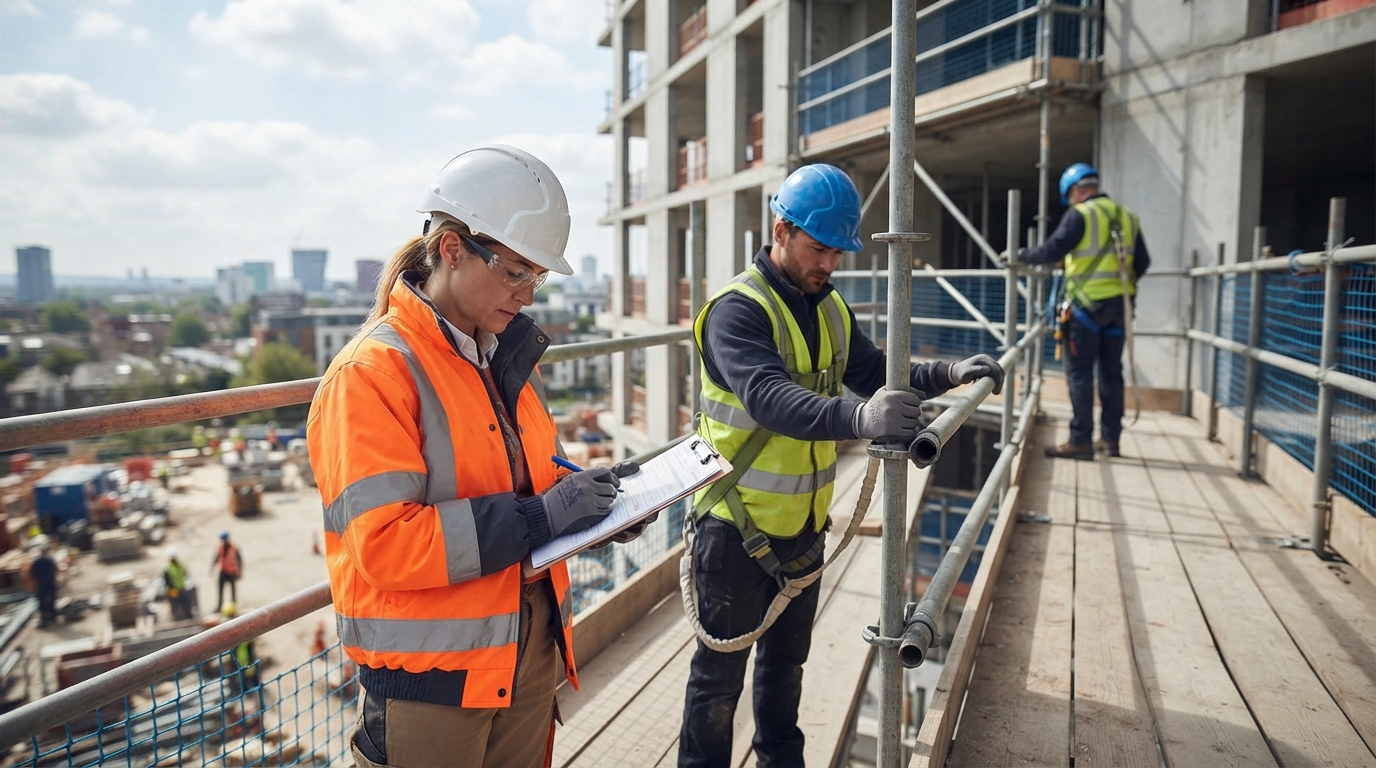
Making safety work alongside your schedule, not against it
Safety does not need to slow projects down, it needs to be planned into the scaffold setup. When the equipment and scaffold system match the job, your site can run efficiently with fewer interruptions.
We understand you must continue to trade and therefore we resolve all access requirements to minimise any business interruption. That means better coordination of access routes, safe working zones, and platform arrangements so trades are not forced into risky shortcuts.
Established since 2016, we are one of the most experienced scaffolding companies in Kent and are knowledgeable in all aspects of scaffolding hire. Our approach is straightforward, we plan properly, install correctly, inspect consistently, and maintain safety controls so your team can work with confidence.
We always charge the right price first time, we are competitive on price and unbeatable on quality. For a reputable scaffolding firm and temporary roofing expert in Kent with a 100% safety record look no further.
We’ll help get you off the ground Kent Scaffolding for repairs to your roof/chimney, the exterior of your house and for painting.
Controls
Top Essential Scaffolding Safety Equipment for Modern Construction Sites comes down to three practical outcomes, safe access, safe platform edges, and safety controls that prevent falling objects and slip hazards. When you build those controls into the scaffold system, inspect properly, and support workers with training, you reduce risk and keep the project moving.
Whether you’re planning work in Maidstone, Medway, West Malling, Rochester, or wider Kent areas, our reliable team of scaffolds and our focus on compliance and safety help you get the job done with care. If you need a safe, system-led approach, contact us for a no-obligation quotation via our contact page.
Frequently Asked Questions
What are the top essential scaffolding safety equipment items I should prioritise first?
For Top Essential Scaffolding Safety Equipment for Modern Construction Sites, prioritise guardrails, toe boards, and safe access equipment such as properly arranged ladders and routes. These controls address the most common accident pathways, edge falls, slip and trip hazards, and falling objects.
Is safety equipment on scaffolds enough, or do we need training as well?
Safety gear on scaffolds is essential, but it is only effective when workers understand how to use it and what to do in an emergency. For Top Essential Scaffolding Safety Equipment for Modern Construction Sites, self-rescue and emergency readiness are part of the safety system, not an optional add-on.
How do I prevent slipping or tripping on scaffold decks during busy construction work?
Slip and trip risk is a major driver of scaffolding accidents, so the Scaffolding Safety approach should include controlled access routes, stable decking, and good housekeeping. We also recommend planning the work sequence so walk paths stay clear as trades move.
What containment equipment helps most with falling objects on scaffolding sites?
To match Top Essential Scaffolding Safety Equipment for Modern Construction Sites, use toe boards and keep platform edge discipline strict, so tools and materials cannot drift into hazardous zones. Containment works best when it is planned into the scaffold setup and supported by clear handling and storage routines.
How often should scaffolding be inspected, and who should do it?
Inspections are a core part of making Scaffolding Safety effective over time, because conditions change as the site works proceed. The inspections should be carried out by competent personnel with clear responsibility for planning, assembly verification, and ongoing maintenance checks.
Can correct scaffold design and safety equipment reduce delays and business interruption?
Yes, because when access routes, platform protection, and containment are planned from the start, trades spend less time adjusting and reworking unsafe setups. That is the same principle behind our view that professional scaffolding services can save time and money, especially on live commercial schedules.
What should property managers consider for scaffolding safety during refurbishment and retrofit projects?
For refurbishment and retrofit, Essential Scaffolding Safety Equipment should support safe access and safe working across multiple stages, including external envelope tasks. We also advise planning around EPC B compliance timelines, so your scaffolds and safety controls stay coordinated as the multi-residential wave continues.
Need Professional Scaffolding for Your Project?
Contact us now:


