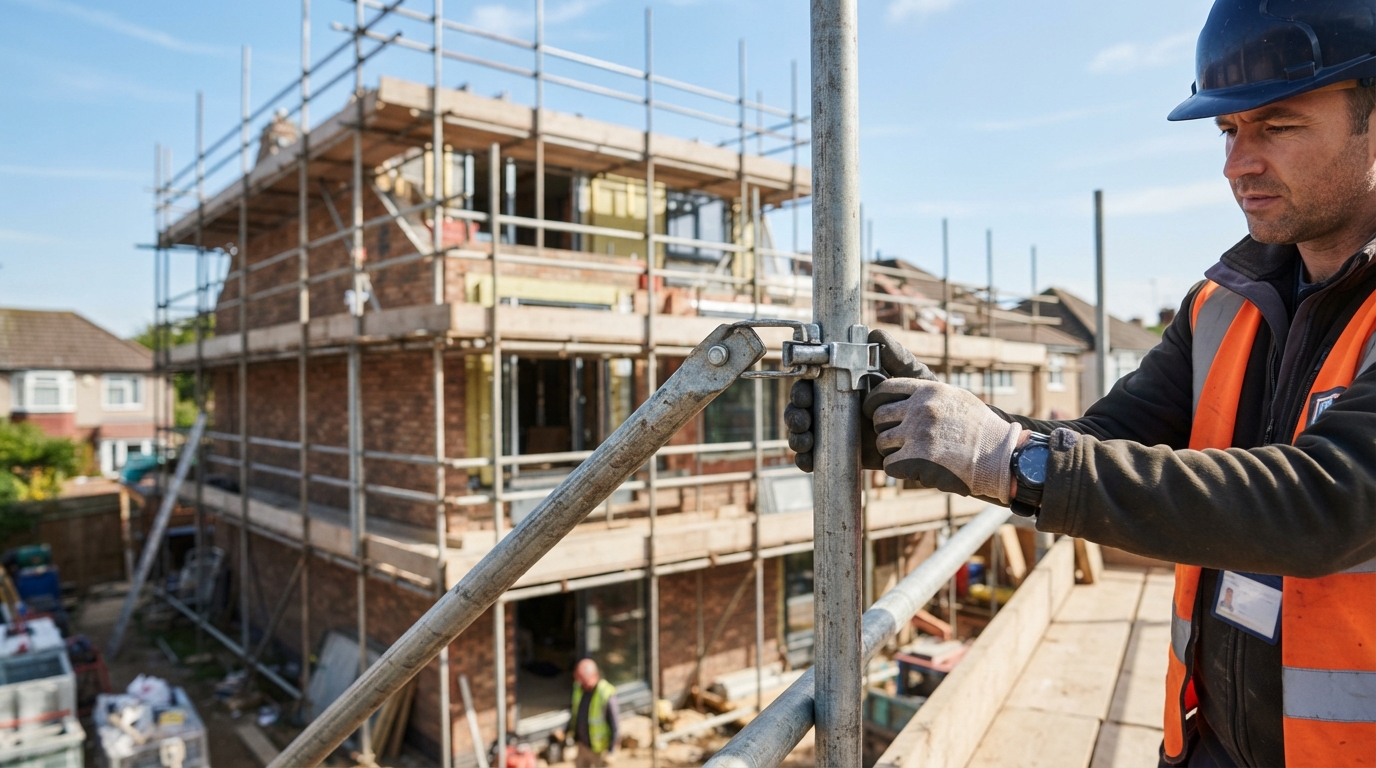
Over 70% of workplace accidents are linked to faulty scaffolding, which makes learning how to choose the right scaffolding for multi-storey extensions one of the most important decisions you’ll make before the first brick goes down. A multi-storey extension puts more load, more height, and more complexity into play than a simple loft conversion or single-storey rear addition, so the scaffold beneath your build team has to be right first time.
We’ve been supplying, erecting, and dismantling scaffolding across Maidstone, Medway, West Malling, Rochester, and the wider Kent region since 2016, and we’ve seen first-hand how the wrong system slows a build, blows a budget, or worse. This guide walks you through exactly what to look for.
Key Takeaways
- Height and load dictate system type: Multi-storey extensions almost always need system scaffolds rather than basic frame scaffolds due to the additional weight and wind loading at height.
- Ground conditions come first: A ground survey before scaffold design prevents settlement issues that can compromise the entire structure mid-build.
- CITB-certified erectors are non-negotiable: Anyone erecting scaffolding above a certain height must hold recognised certification, and you should always ask to see it.
- Access points matter as much as height: Consider how your domestic scaffolding hire will affect access to doors, driveways, and neighbouring properties for the full duration of the project.
- Insurance and accreditation protect you: Look for SSIP, SMAS, and public liability cover of at least £5m before signing any contract.
- Heritage properties need specialist handling: Listed buildings and conservation areas often require bespoke scaffold design that avoids damage to original brickwork or render.
- Commercial extensions need continuity planning: If you’re extending a trading premises, ask your commercial scaffolding hire provider how they’ll minimise business interruption.
Why Getting Scaffolding Right Matters for Multi-Storey Extensions
A single-storey rear extension is one thing. Add a second or third floor and everything changes, from the loading calculations to the tie pattern into the existing brickwork.
The majority of scaffolding accidents happen because of simple mistakes during planning, assembly, loading, and maintenance that workers can easily avoid with proper knowledge and attention to safety protocols. Multi-storey extensions raise the stakes because there’s simply more height for something to go wrong.
Getting the design right at quotation stage saves you money later. Our team treat every property with the utmost care, and that starts with an honest assessment of what your particular extension actually needs, not a generic package.
Understanding the Different Types of Scaffolding for Multi-Storey Work
Not every scaffold is built the same, and choosing the wrong category for a multi-storey job is one of the most common errors we see. Here’s a breakdown of the main types you’re likely to be quoted for.
| Scaffold Type | Best Suited For | Key Consideration |
|---|---|---|
| System scaffolds | Multi-storey extensions, complex elevations | Faster erection, higher load capacity |
| Tube and clamp | Irregular or awkward building shapes | More flexible but slower to erect |
| Temporary roof scaffolds | Extensions requiring roof removal or replacement | Keeps the build weatherproof throughout |
| Shoring & propping | Structural alterations, load-bearing wall removal | Supports the building while structural work takes place |
| Hanging scaffolds | Sites with restricted ground access | Suspended from the structure rather than the ground |
You can read more detail on each of these in our full breakdown of understanding different types of scaffolding, which covers the technical differences in more depth than we can here.
How to Choose the Right Scaffolding for Multi-Storey Extensions Based on Height and Access
Height is the first factor we assess on every job. A two-storey extension needs a different load calculation and tie frequency to a three-storey addition, and the scaffold design has to reflect that from the outset.
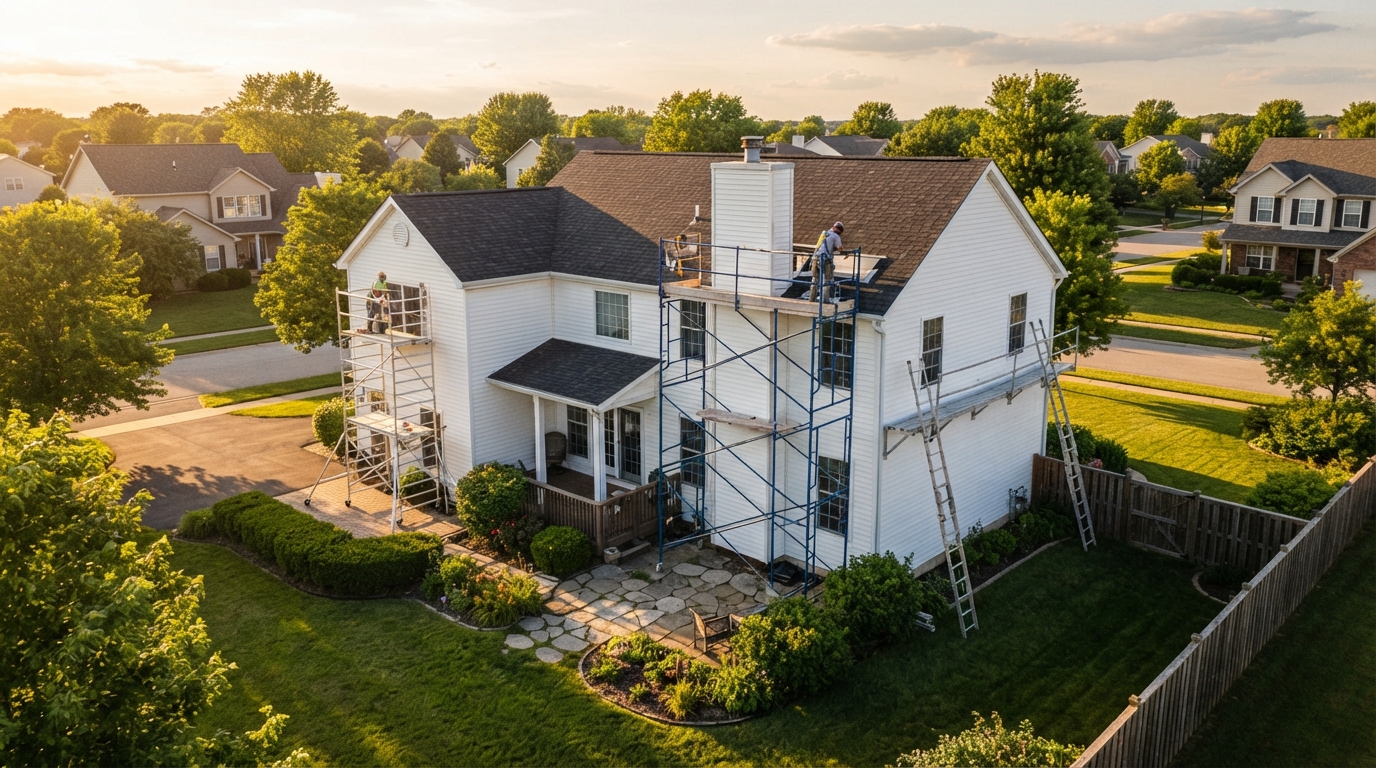
Access is the second factor, and it’s often underestimated by homeowners planning their own project. Narrow side passages, shared driveways, and tight rear gardens all affect what type of scaffold can physically be erected.
We understand you must continue to trade or live comfortably in your home throughout the build, and therefore we resolve all access requirements to minimise any disruption. Whether you’re in Maidstone, Dartford, or Medway, the ground conditions and access points on your specific plot will shape the final design more than any catalogue system ever could.
System Scaffolds vs Traditional Tube and Clamp for Extensions
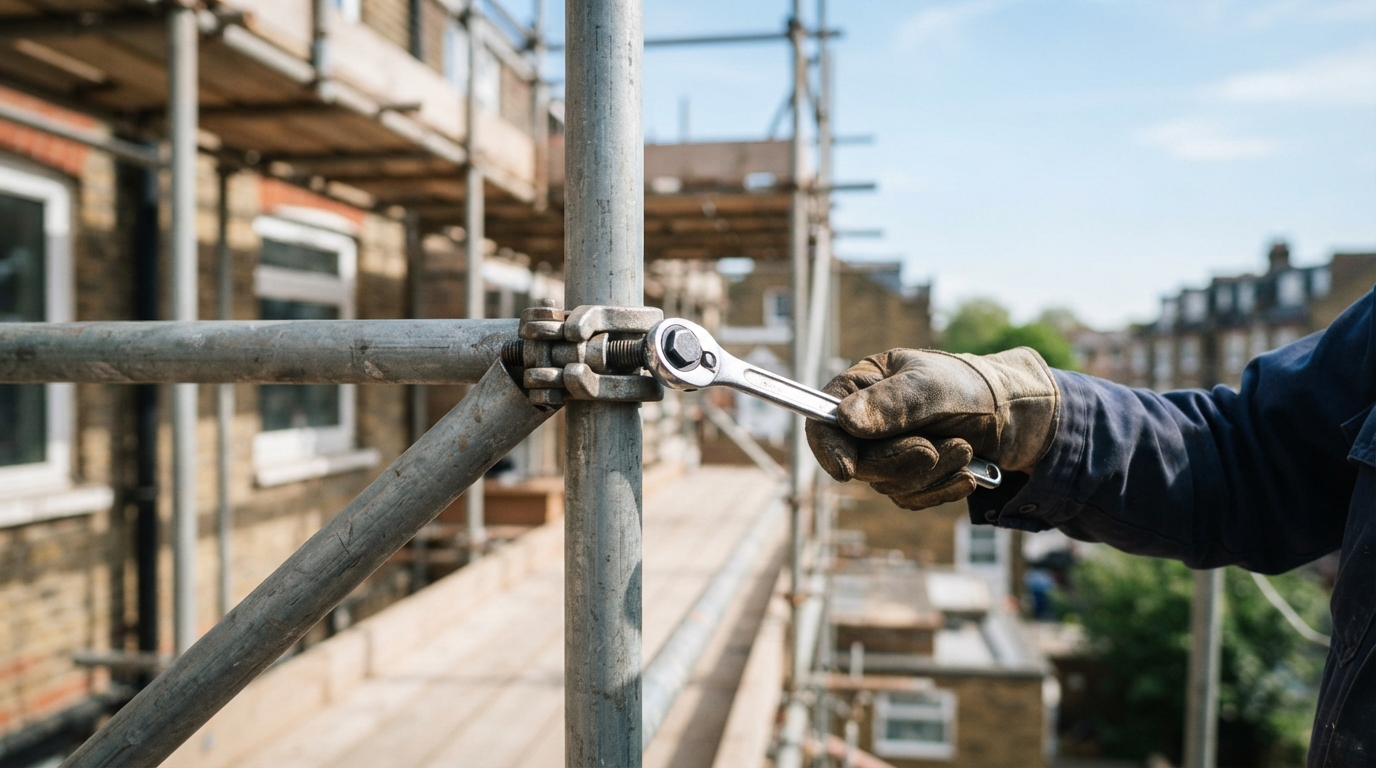
For most multi-storey extensions, we recommend system scaffolds over traditional tube and clamp. System scaffolds go up faster, carry higher loads, and offer a more consistent platform for bricklayers and roofers working at height.
Tube and clamp still has its place, particularly on period properties with awkward bay windows or projecting chimney breasts where a fixed system simply won’t fit. A reputable scaffolding firm should be able to explain why they’ve chosen one over the other for your specific elevation, not just default to whatever is sat in the yard.
We’re knowledgeable in all aspects of scaffolding hire, and matching the right system to the right job is the single biggest factor in keeping your project on time and on budget.
Scaffolding for Heritage Properties and Listed Buildings
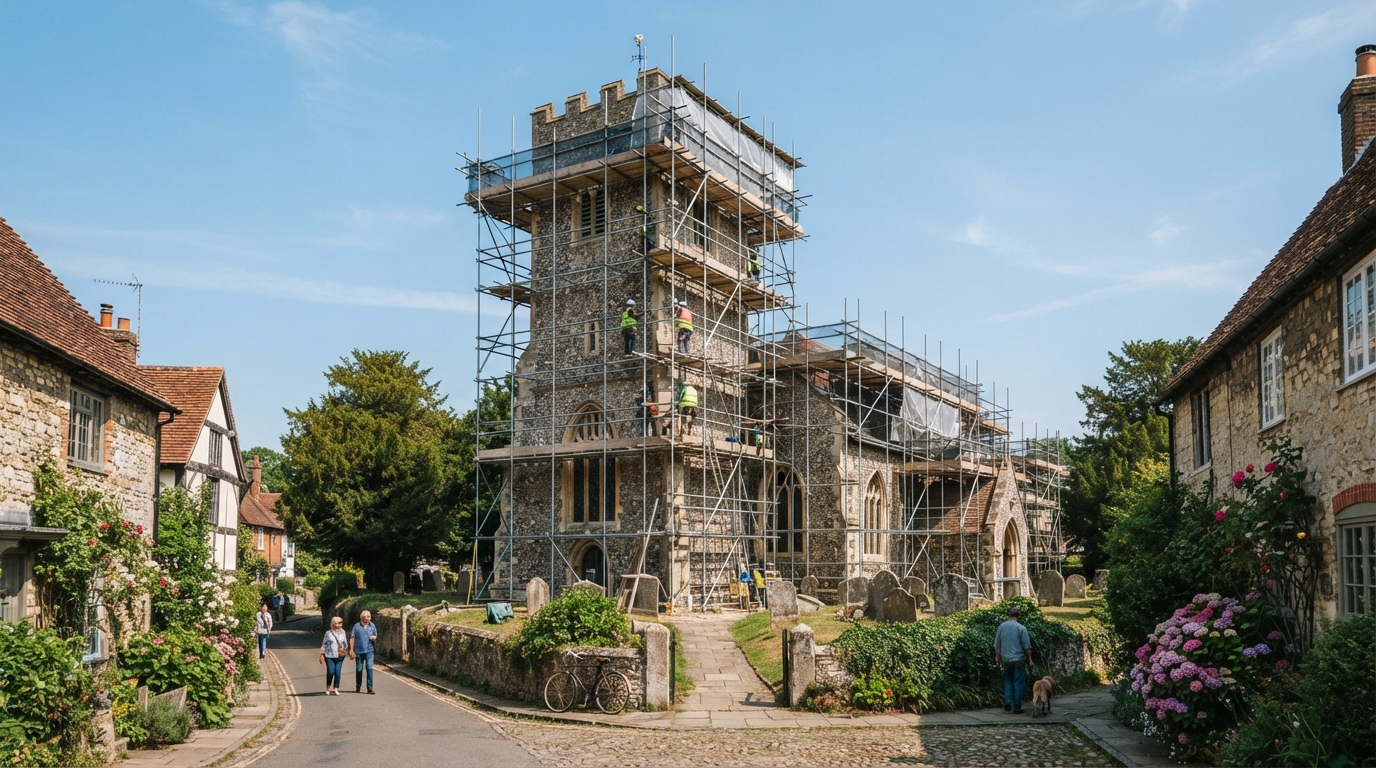
Multi-storey extensions on period properties bring an extra layer of complexity. Original brickwork, decorative render, and delicate pointing can all be damaged by standard tie points and clamps if the scaffold isn’t designed with the building’s age in mind.
We’re trusted to work on all heritage sites and listed buildings across Kent, using padded ties and careful positioning to protect the fabric of the building while still delivering a fully compliant working platform. This isn’t a job for a generic hire firm; it needs a team that understands both modern safety standards and traditional construction methods.
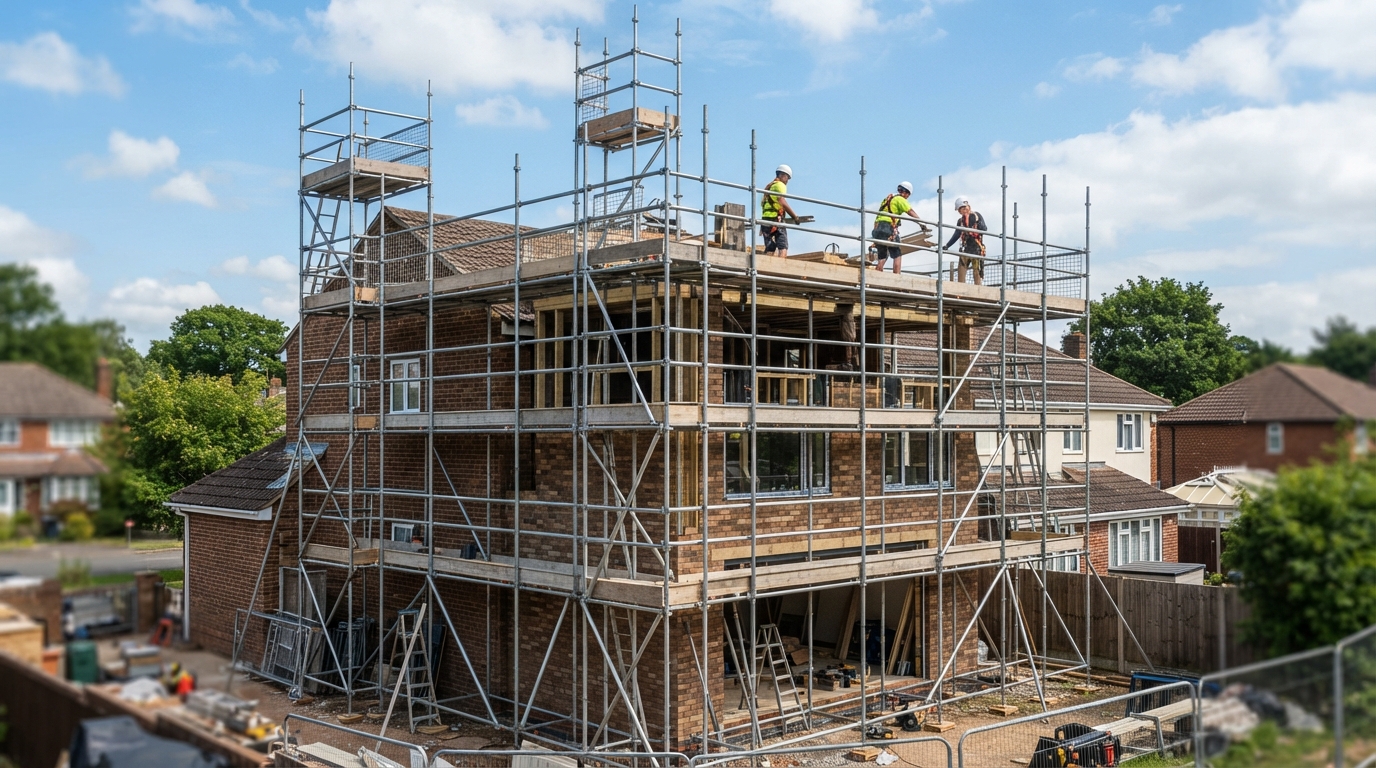
Safety Standards and Compliance When Choosing Scaffolding for Multi-Storey Extensions
Scaffolding accidents cause serious injuries and deaths on construction sites every year, yet most of these incidents are preventable. Choosing the right scaffolding for multi-storey extensions means checking credentials before checking prices.
Ask any potential supplier for evidence of CITB-certified erectors, SSIP and SMAS accreditation, and a minimum of £5m public liability insurance. Ask, too, about their safety record; anyone hesitant to answer probably isn’t the right choice for a build where you and your family will be living underneath scaffolding for weeks or months.
For a reputable scaffolding firm and temporary roofing expert in Kent with a 100% safety record, look no further. We always charge the right price first time, and we’re competitive on price while being unbeatable on quality.
Cost Considerations: What Multi-Storey Scaffolding Hire Really Costs
Scaffolding costs typically range from $1.50 to $3.50 per foot, though the final figure on your job will depend on height, complexity, and how long the scaffold needs to stay up. Multi-storey extensions cost more to scaffold than single-storey builds simply because there’s more material, more ties, and more labour involved in a safe erection.
Remodelling projects are also getting bigger; 57% of remodelling professionals report that renovation projects now regularly involve multiple rooms rather than a single addition. That trend is exactly why 65% of homeowners who recently renovated chose to upgrade their current home rather than move, and it’s pushing demand for properly engineered, higher-capacity scaffolds rather than a simple ladder and platform.
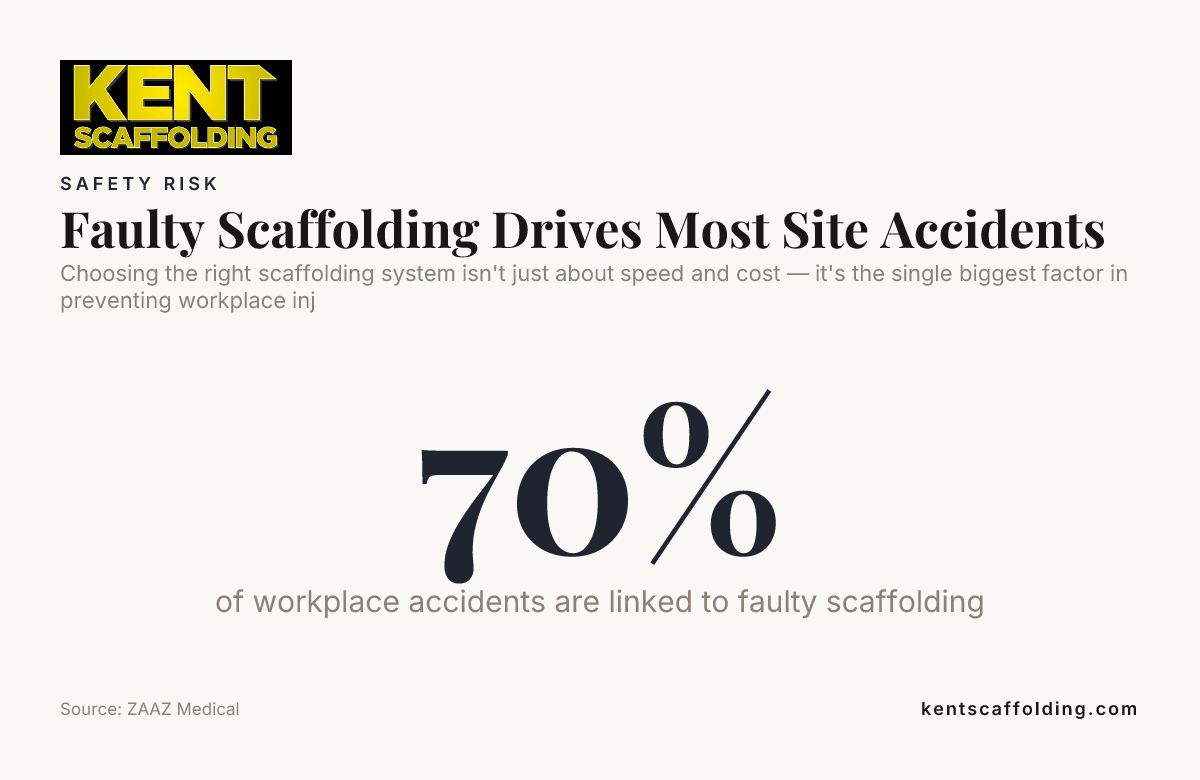 Choosing the right scaffolding system isn’t just about speed and cost. It’s the single biggest factor in preventing workplace injuries on multi-storey builds.
Common Mistakes to Avoid When Choosing Scaffolding for Multi-Storey Extensions
We’ve written before about the 5 common scaffolding mistakes we see time and again on domestic sites, and multi-storey extensions amplify every one of them.
- Underestimating load requirements: Scaffolding planks must be able to support at least 75% of their intended load capacity, and this margin matters even more when bricklayers, mortar boards, and materials are all sitting on the same platform.
- Skipping the ground survey: Uneven or soft ground causes settlement that can twist a scaffold out of true over several weeks.
- Choosing the cheapest quote without checking accreditation: Approximately 9% of scaffold-related accidents specifically involve failures of the planks, often traced back to cut corners on materials.
- Ignoring tie points on period brickwork: This causes lasting damage that’s far more expensive to repair than the scaffold hire itself.
- Not planning for weather protection: A temporary roof scaffold keeps your build weatherproof and on schedule, particularly important if your extension is exposed while the roof structure is open.
Why Choose Kent Scaffolding for Your Multi-Storey Extension
Established since 2016, we are one of the most experienced scaffolding companies in Kent and are knowledgeable in all aspects of scaffolding hire, from simple domestic hire through to complex commercial contracts. Our reliable team of scaffolds has completed multi-storey extension projects across Maidstone, West Malling, Rochester, Medway, and the wider Kent areas, and we pride ourselves on delivering exceptional scaffolding services on every one of them.
We’ll help get you off the ground whether your extension involves a straightforward second-storey addition or a more complex build requiring shoring and propping. Have a look through our project gallery to see the range of multi-storey work we’ve completed, and browse our full scaffolding services to see how each system might apply to your build.
If you’re based in Canterbury, Gravesend, Sevenoaks, Tonbridge, or Dartford, our local pages cover the specific access and planning considerations for each area, including our Canterbury scaffolding construction and Sevenoaks scaffolding construction services.
We always charge the right price first time, we are competitive on price and unbeatable on quality. That principle applies just as much to a two-storey rear extension as it does to a full commercial contract.
Get it Right
Learning how to choose the right scaffolding for multi-storey extensions comes down to a handful of decisions made early: the right system for the height and load, a supplier with genuine accreditation, and a design that accounts for your specific ground conditions and access.
Get those decisions right and the scaffold becomes invisible, a safe, stable platform your build team barely thinks about. Get them wrong and it becomes the biggest risk on your entire project.
If you’d like a no-obligation quotation for your multi-storey extension anywhere across Maidstone, Medway, or the wider Kent area, our team is ready to talk through the details with you.
Frequently Asked Questions
What type of scaffolding is best for a two-storey extension?
System scaffolds are generally the best choice for two-storey extensions because they offer higher load capacity and faster erection than traditional tube and clamp. The final decision on how to choose the right scaffolding for multi-storey extensions should always factor in the specific access and ground conditions of your property.
How much does scaffolding cost for a house extension?
Scaffolding costs typically range from $1.50 to $3.50 per foot, though multi-storey extensions cost more due to the additional height, ties, and labour required. Always request a no-obligation quotation so you can compare like-for-like across suppliers.
Do I need planning permission for scaffolding on a multi-storey extension?
Scaffolding itself doesn’t usually require separate planning permission, but if it encroaches on a public footpath or highway you may need a licence from your local council. A reputable scaffolding firm will advise you on this as part of the design process.
How long can scaffolding stay up during a multi-storey extension build?
Scaffolding hire periods vary depending on the scale of the project, but multi-storey extensions typically require scaffolding for several weeks to a few months. Your supplier should give you a clear timeframe as part of your quotation.
Is system scaffolding safer than tube and clamp for extensions?
System scaffolds are generally considered safer for standard multi-storey extensions because the standardised components reduce assembly errors. Incorporating modern safety features on either system reduces accident rates by 40%, so the quality of the erector matters just as much as the system chosen.
Can scaffolding be used on listed or heritage buildings?
Yes, but it requires a supplier experienced with heritage sites who understands how to tie into original brickwork without causing damage. Always ask specifically about heritage experience before hiring for a listed building extension.
What questions should I ask before hiring scaffolding for my extension?
Ask about CITB certification, insurance cover, safety record, and how they’ve approached similar multi-storey projects. These questions form the core of how to choose the right scaffolding for multi-storey extensions with confidence, rather than simply picking the cheapest quote.
Need Professional Scaffolding for Your Project?
Contact us now: