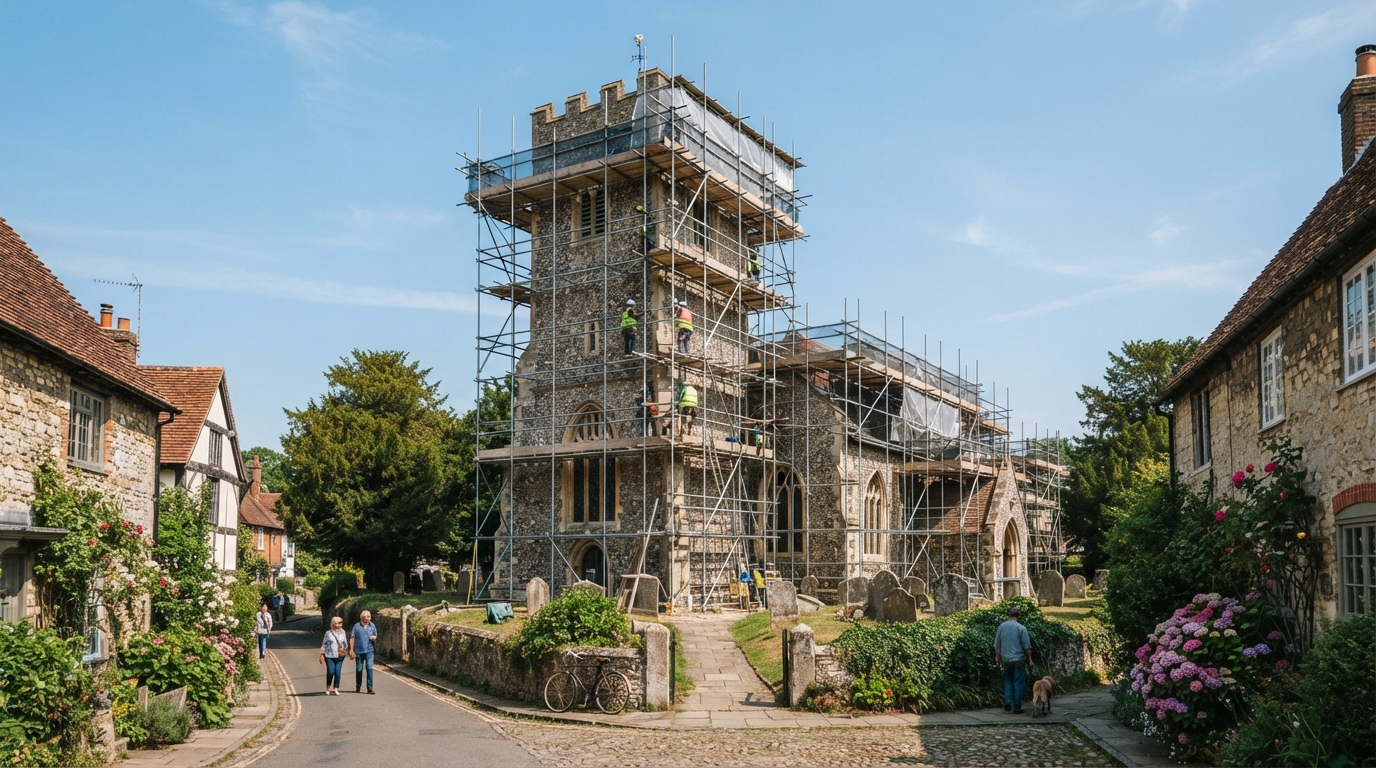
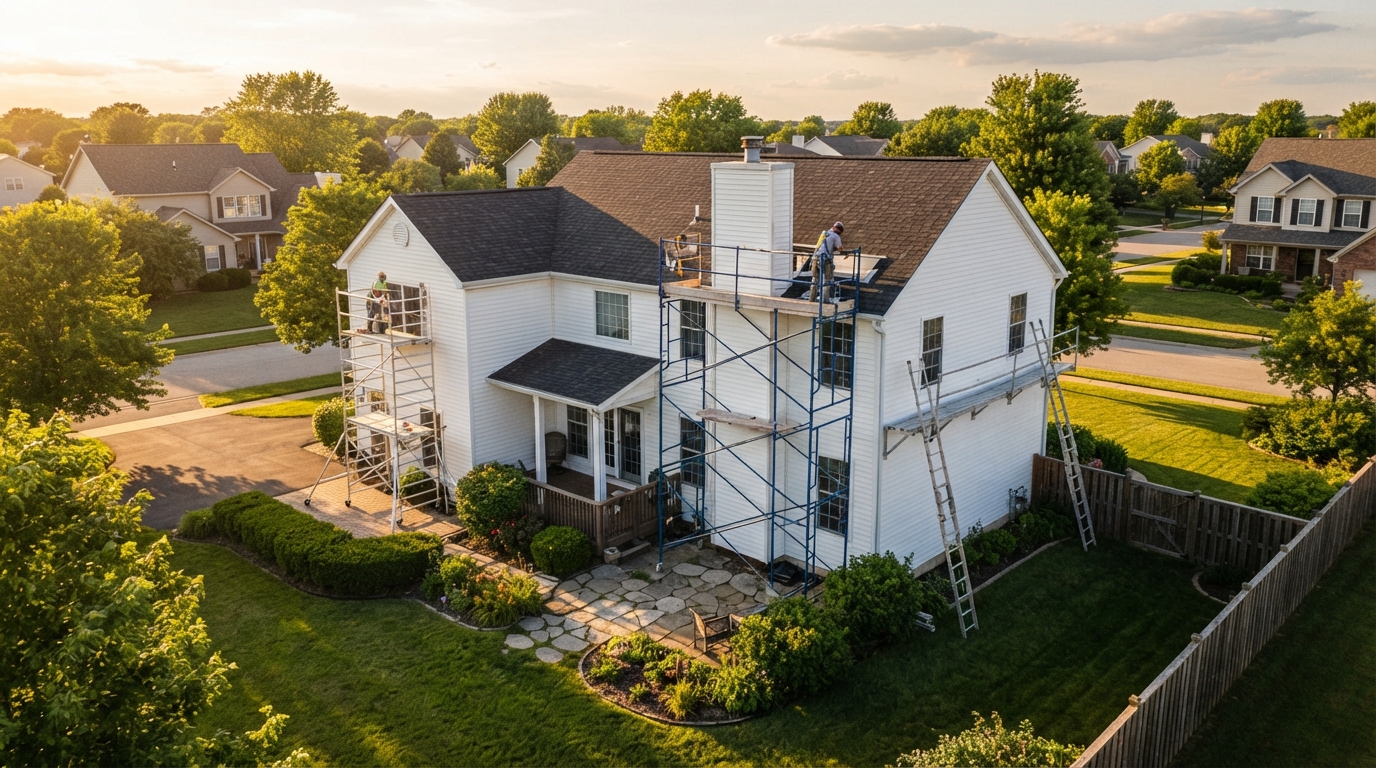
Commercial construction projects require temporary structures that keep workers safe whilst allowing them to reach high areas. Scaffolding systems create stable platforms for building, maintenance, and repair work on large structures. Without proper scaffolding, construction crews cannot safely access elevated work areas or complete complex projects efficiently.
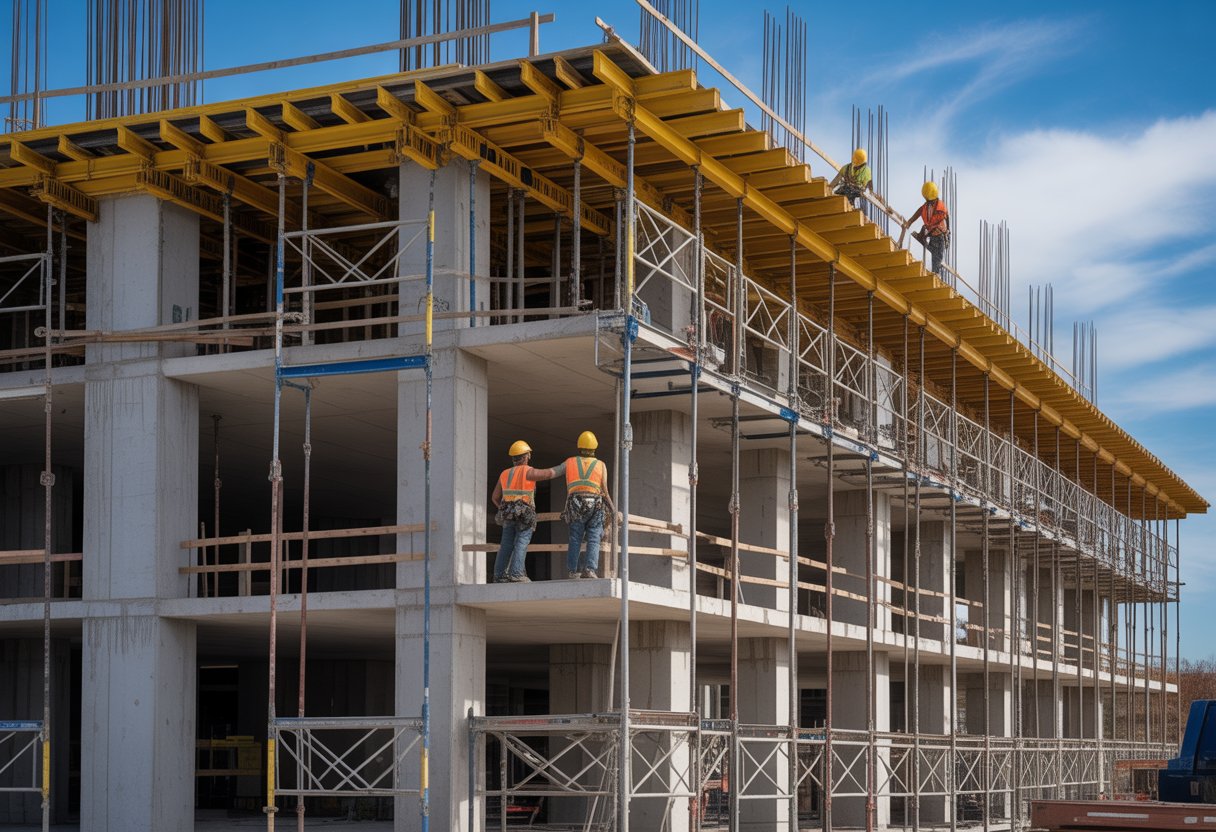
Reliable scaffolding serves as the backbone of commercial construction, providing essential safety and structural support that directly impacts project success. Quality scaffolding systems prevent accidents, reduce project delays, and ensure compliance with safety regulations. They also allow multiple trades to work simultaneously at different heights without compromising safety or productivity.
The type and configuration of scaffolding used can significantly affect both worker safety and project timelines. Understanding the various scaffolding options, safety requirements, and efficiency benefits helps construction managers make informed decisions that protect their teams and keep projects on track. Proper scaffolding selection and installation require expertise to match the system to specific project needs and site conditions.
Understanding the Role of Reliable Scaffolding in Commercial Construction
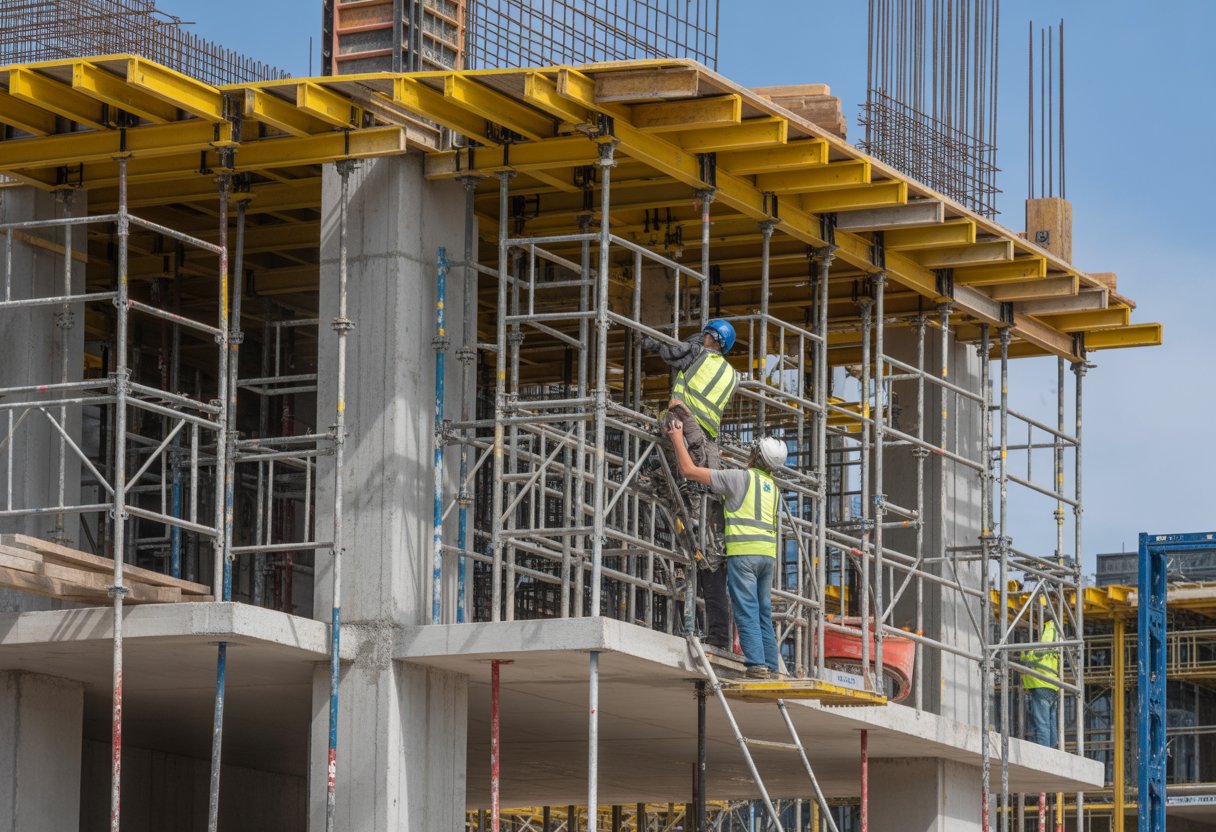
Reliable scaffolding systems serve as the foundation for worker safety and project efficiency on commercial construction sites. The unique demands of large-scale commercial projects require specialised equipment and heightened safety standards that differ significantly from residential work.
Defining Scaffolding and Scaffolding Systems
Scaffolding consists of temporary structures that provide safe working platforms for construction workers at various heights. These systems include metal tubes, boards, couplers, and base plates that connect to form stable frameworks around buildings.
Commercial scaffolding systems are more complex than basic residential setups. They must support heavier loads and accommodate multiple trades working simultaneously. Standard systems can hold between 225-270 kilograms per square metre.
Key components include:
- Steel or aluminium tubes for vertical and horizontal support
- Working platforms made from timber or metal planks
- Guardrails and toe boards for fall protection
- Base plates and adjustable legs for ground stability
- Couplers and clamps for secure connections
Modern scaffolding systems come in various types. Tube and coupler systems offer flexibility for irregular structures. System scaffolding uses prefabricated components for faster assembly.
Why Reliability Matters in Large-Scale Projects
Commercial construction projects involve significant financial investments and tight deadlines. Unreliable scaffolding can cause costly delays and safety incidents that impact the entire project timeline.
Large-scale projects typically employ dozens of workers simultaneously across multiple levels. The scaffolding must maintain structural integrity under constant use and varying weather conditions. Any failure could result in serious injuries and project shutdowns.
Reliable scaffolding provides:
- Consistent load-bearing capacity throughout the project
- Reduced maintenance and adjustment requirements
- Lower risk of structural failures
- Improved worker confidence and productivity
Quality scaffolding systems undergo rigorous testing and certification. They meet British Standards BS EN 12811 for temporary works equipment. This ensures consistent performance across different construction sites.
The construction industry depends on predictable equipment performance. Reliable scaffolding allows project managers to maintain schedules and allocate resources effectively.
Challenges Unique to Commercial Construction Sites
Commercial construction sites present distinct challenges that residential projects rarely encounter. These sites often operate in busy urban areas with limited space and strict safety regulations.
Space constraints force scaffolding systems to fit within tight boundaries. Multi-storey buildings require scaffolding that extends considerable heights whilst maintaining stability. Ground conditions may be uneven or require special foundation considerations.
Multiple trades work simultaneously on commercial projects. Scaffolding must accommodate electricians, plumbers, glaziers, and other specialists. Each trade requires specific access points and working areas.
Extended project timelines mean scaffolding remains in place for months or years. The equipment must withstand prolonged exposure to weather and heavy use without degrading. Regular inspections become critical for maintaining safety standards.
Regulatory compliance is stricter for commercial projects. Health and Safety Executive requirements demand detailed planning and documentation. Scaffolding must meet higher load requirements and safety factors than residential work.
Wind loading presents particular challenges for tall commercial buildings. Scaffolding systems require additional bracing and tie-ins to prevent movement during adverse weather conditions.
Ensuring Worker Safety with Quality Scaffolding

Quality scaffolding systems protect workers through built-in safety features and proper design that prevents falls and accidents. Proper guardrails, toe boards, and secure working positions create multiple layers of protection for construction teams.
Risk Reduction and Accident Prevention
Falls from height represent the leading cause of construction fatalities and serious injuries. Quality scaffolding dramatically reduces these risks through proper engineering and installation.
Well-designed scaffolding systems distribute weight evenly across multiple support points. This prevents structural failure that could endanger workers below and above.
Key Risk Reduction Features:
- Load-bearing calculations matched to project requirements
- Regular inspection schedules to identify wear or damage
- Proper anchoring to building structures
- Weather-resistant materials that maintain strength over time
Professional scaffolding installation ensures compliance with safety regulations. Trained technicians understand load limits and structural requirements that prevent accidents.
Quality materials resist corrosion and wear that could weaken the structure. This reliability means workers can focus on their tasks without worrying about platform stability.
Guardrails, Toe Boards and Other Essential Features
Guardrails serve as the primary fall protection on scaffolding platforms. Standard guardrails must be at least 950mm high and capable of withstanding 740 newtons of force.
Toe boards prevent tools and materials from falling off platforms. These boards must extend at least 150mm above the platform surface to effectively contain debris.
Essential Safety Components:
- Top rail: Main barrier at working height
- Mid rail: Secondary protection between top rail and platform
- Toe boards: Debris containment along platform edges
- Access gates: Controlled entry points with self-closing mechanisms
Mesh panels provide additional protection against falling objects. These panels install between guardrails to create a complete barrier system.
Quality scaffolding includes non-slip platform surfaces. Textured surfaces or perforated planks prevent workers from slipping during wet conditions.
Safe Working Position at Height
Proper working position depends on stable, level platforms that allow natural movement. Workers need adequate space to perform tasks without reaching beyond safe limits.
Platform width affects worker safety significantly. Standard platforms should be at least 600mm wide for basic access and 900mm wide for working platforms.
Safe Working Requirements:
- Level platforms within 10mm tolerance
- Secure handholds for climbing access
- Clear pathways free from obstacles
- Adequate lighting for all working areas
Workers must maintain three points of contact when climbing scaffolding. This means two hands and one foot, or two feet and one hand, always touching the structure.
Quality scaffolding provides multiple access points to reduce overcrowding. This prevents workers from taking unsafe shortcuts or working in cramped conditions.
Proper platform spacing allows workers to move between levels safely. Standard vertical spacing of 2 metres provides adequate headroom whilst maintaining structural integrity.
Types of Scaffolding Used in Commercial Construction

Commercial construction projects require different scaffolding systems based on building height, access needs, and specific site conditions. System scaffolding provides modular solutions for most projects, whilst suspended and cantilever systems offer access where traditional scaffolding cannot reach, and specialist high-rise solutions address the unique challenges of tall building construction.
System Scaffolding and Its Applications
System scaffolding uses modular components that connect together to create stable platforms. These prefabricated parts include tubes, couplers, and brackets that fit together quickly.
Key advantages include:
- Faster assembly and dismantling
- Consistent load-bearing capacity
- Reduced labour costs
- Better safety features
This scaffolding type works well for commercial buildings up to medium height. It provides reliable access for bricklayers, painters, and maintenance teams.
The modular design allows contractors to adapt the structure as work progresses. Components can be added or removed without rebuilding the entire system.
Most system scaffolding can support heavy loads. This makes it suitable for commercial projects that require lifting materials to different levels.
Safety features like guardrails and toe boards come built into the design. This reduces the risk of accidents on busy commercial sites.
Suspended and Cantilever Scaffolding Explained
Suspended scaffolding hangs from cables or chains attached to the building structure above. Workers can raise or lower these platforms as needed.
This system works best for:
- Window cleaning on tall buildings
- Exterior painting and repairs
- Installing cladding systems
- Maintenance work on facades
Cantilever scaffolding extends outward from the building without ground support. It uses brackets and beams anchored to the structure itself.
Cantilever systems prove useful when ground access is limited. They work well around busy streets or where the building base cannot accommodate traditional scaffolding.
Both systems require careful engineering calculations. The building structure must be strong enough to support the additional loads.
Regular inspections are essential for suspended and cantilever scaffolding. The support points need checking for wear or damage that could cause failure.
Specialist Scaffolding Solutions for High-Rise Buildings
High-rise construction demands advanced scaffolding systems that can handle extreme heights and wind loads. These projects often use climbing scaffolding that moves up as construction progresses.
Climbing systems offer several benefits:
- Reduced material quantities
- Better protection from wind
- Continuous work platform access
- Improved safety at height
Mast climbing work platforms provide another solution for high-rise buildings. These systems use electric motors to raise platforms along vertical masts.
Weather protection becomes critical on tall buildings. Specialist solutions include windbreaks and weather shields that protect workers and materials.
Load calculations for high-rise scaffolding require expert engineering. Wind forces increase significantly with height and can affect structural stability.
Access towers help workers reach extreme heights safely. These independent structures provide secure routes between different building levels.
Modern high-rise scaffolding often incorporates safety systems like fall arrest points and emergency descent equipment. These features help protect workers in dangerous conditions.
Key Components and Configuration of Commercial Scaffolding
Commercial scaffolding systems rely on specific components working together to create stable work platforms. These systems require careful configuration to meet the unique demands of each construction project.
Primary Scaffolding Components
Commercial scaffolding systems consist of several essential parts that work together. Standards are the vertical tubes that form the main support structure. They carry the weight of the entire system.
Ledgers connect horizontally between standards at each level. These create the framework for each working platform. Transoms run perpendicular to ledgers and provide additional support.
Base plates distribute the load at ground level. They prevent standards from sinking into soft surfaces. Adjustable base jacks help level the scaffolding on uneven ground.
Working platforms require scaffold boards or decking units. These create safe surfaces for workers and materials. Guardrails and toe boards provide fall protection around each level.
Ties secure the scaffolding to the building structure. These prevent the system from moving away from the wall. Bracing adds diagonal support between standards and ledgers.
Couplers and fittings join all components together. Different types handle various connection angles and loads.
Customisation and Flexibility for Complex Projects
Large commercial projects need scaffolding systems that adapt to unique building shapes. Modular scaffolding allows teams to create custom configurations for complex structures. These systems use standardised components in flexible arrangements.
System scaffolding provides pre-engineered connections for faster assembly. The components lock together without traditional couplers. This reduces assembly time on large projects.
Suspended scaffolding works where ground access is limited. These systems hang from roof structures or cranes. They provide access to building facades without blocking ground-level work.
Mobile scaffolding towers offer flexibility for maintenance tasks. Workers can move these units as needed around the project site.
Cantilever scaffolding extends outward from building faces. This configuration provides access where obstacles prevent standard scaffolding placement. The system requires careful load calculations and additional bracing.
Project teams must consider load requirements when configuring systems. Different areas may need platforms rated for tools, materials, or heavy equipment.
Impact of Reliable Scaffolding on Project Efficiency and Outcomes
Reliable scaffolding systems directly influence project timelines through improved worker access and enhanced productivity on construction sites. These systems also provide long-term value through reduced maintenance requirements and adaptable configurations for future project needs.
Access and Productivity on Site
Reliable scaffolding solutions create multiple access points across a construction site. Workers can reach different building levels quickly and safely. This reduces travel time between work areas.
Proper scaffolding systems support both workers and equipment efficiently. Heavy tools and materials can be stored on scaffold platforms. This eliminates repeated trips to ground level for supplies.
Key productivity benefits include:
- Faster movement between work zones
- Reduced setup time for daily tasks
- Better workflow organisation across teams
- Simultaneous work on multiple building levels
Construction teams work more efficiently when scaffolding provides stable, secure platforms. Workers complete tasks faster when they feel safe and confident. Quality scaffolding reduces delays caused by equipment failures or safety concerns.
Commercial construction projects benefit from scaffolding that accommodates complex building designs. Modern scaffolding adapts to irregular building shapes and heights. This flexibility prevents work stoppages and schedule delays.
Long-Term Maintenance and Future Adaptability
Quality scaffolding requires less frequent repairs and replacements during project lifecycles. Durable materials and proper installation reduce maintenance costs. This saves money and prevents project interruptions.
Reliable scaffolding systems adapt to changing project requirements. Additional levels can be added as buildings grow taller. Configurations adjust when work shifts to different building sections.
Long-term advantages include:
- Lower replacement costs over project duration
- Reduced inspection and repair frequency
- Flexible reconfiguration for design changes
- Extended equipment lifespan across multiple projects
Well-maintained scaffolding maintains its load-bearing capacity throughout construction phases. This consistency supports project schedules and worker safety standards. Construction sites operate smoothly when scaffolding performs reliably over extended periods.
Future project planning benefits from scaffolding that remains structurally sound. Companies can reuse quality scaffolding across different commercial construction projects. This approach reduces overall equipment costs and improves project profitability.
Frequently Asked Questions
Commercial construction teams often face questions about scaffolding selection, maintenance, and compliance requirements. Understanding these key areas helps ensure project success and worker safety.
What are the main safety considerations when selecting scaffolding for commercial construction?
Weight capacity stands as the most critical factor when choosing scaffolding systems. Light-duty scaffolding supports 25 pounds per square foot, whilst heavy-duty systems handle significantly more weight for complex commercial projects.
Structural stability must match the specific building height and design requirements. High-rise commercial buildings often require suspended scaffolding systems that provide flexible access at various elevations.
Weather resistance becomes essential for long-term commercial projects. The scaffolding must withstand wind loads and environmental conditions throughout the construction timeline.
Worker access points need careful planning for multi-trade coordination. Commercial projects involve multiple teams working simultaneously at different heights, requiring well-designed access routes.
How does scaffolding quality impact the overall timeline of a construction project?
Reliable scaffolding eliminates costly delays caused by structural failures or safety incidents. Poor-quality systems often require emergency repairs that halt construction progress for days or weeks.
High-quality scaffolding allows workers to move efficiently between levels and work areas. This improved accessibility directly reduces the time needed to complete construction tasks.
Stable platforms enable workers to focus on their trade skills rather than worrying about equipment reliability. This confidence boost leads to faster, more accurate work completion.
In what ways do regulatory standards influence the choice of scaffolding in commercial building?
Building regulations require specific inspection schedules for commercial scaffolding systems. Scaffolding must be inspected before use, after any alterations, and at least once weekly to maintain compliance.
Load-bearing requirements vary by jurisdiction and project type. Commercial construction must meet stricter weight capacity standards than residential projects.
Safety certification requirements limit acceptable scaffolding types and suppliers. Only approved systems that meet national safety standards can be used on commercial sites.
Documentation requirements mandate detailed records of scaffolding installation, inspection, and maintenance. These records must be available for regulatory review throughout the project.
What role does scaffolding play in ensuring the efficiency of construction workers on-site?
Scaffolding provides stable work platforms that allow workers to use both hands for construction tasks. This stability increases productivity and work quality significantly.
Multiple access points reduce congestion and waiting times between different work areas. Workers can move freely without interfering with other trades or activities.
Tool and material storage areas built into scaffolding systems keep supplies within easy reach. This eliminates repeated trips to ground level for equipment and materials.
Proper scaffolding height reduces physical strain on workers. Teams can work at comfortable positions without excessive bending, reaching, or awkward positioning.
How should scaffolding be maintained and inspected during a commercial construction project?
Daily visual inspections should check for loose connections, damaged components, and structural integrity. Workers must report any concerns immediately to project supervisors.
Weekly formal inspections require qualified personnel to examine all structural elements thoroughly. These inspections must be documented with written reports and corrective action plans.
Weather-related inspections become necessary after storms, high winds, or extreme temperature changes. Environmental conditions can affect scaffolding stability and safety.
Component replacement must use identical specifications and proper installation procedures. Mixed components from different manufacturers can compromise structural integrity.
Could you explain the consequences of using sub-standard scaffolding in commercial construction?
Worker injuries from scaffolding failures result in serious legal liability and project shutdowns. Commercial construction accidents often lead to substantial compensation claims and regulatory penalties.
Project delays from scaffolding problems can cost thousands of pounds per day in lost productivity. These delays often extend beyond the immediate repair time due to workforce disruption.
Insurance complications arise when sub-standard equipment causes accidents or damage. Many policies exclude coverage for incidents involving non-approved scaffolding systems.
Reputation damage affects future business opportunities and client relationships. Commercial clients expect contractors to prioritise safety and use only reliable equipment.
Regulatory fines and potential criminal charges can result from serious scaffolding-related incidents. Construction companies face increasing scrutiny over safety equipment choices and maintenance practices.
Need Scaffolding for Your Commercial Project?
Contact us now 07788 585 362