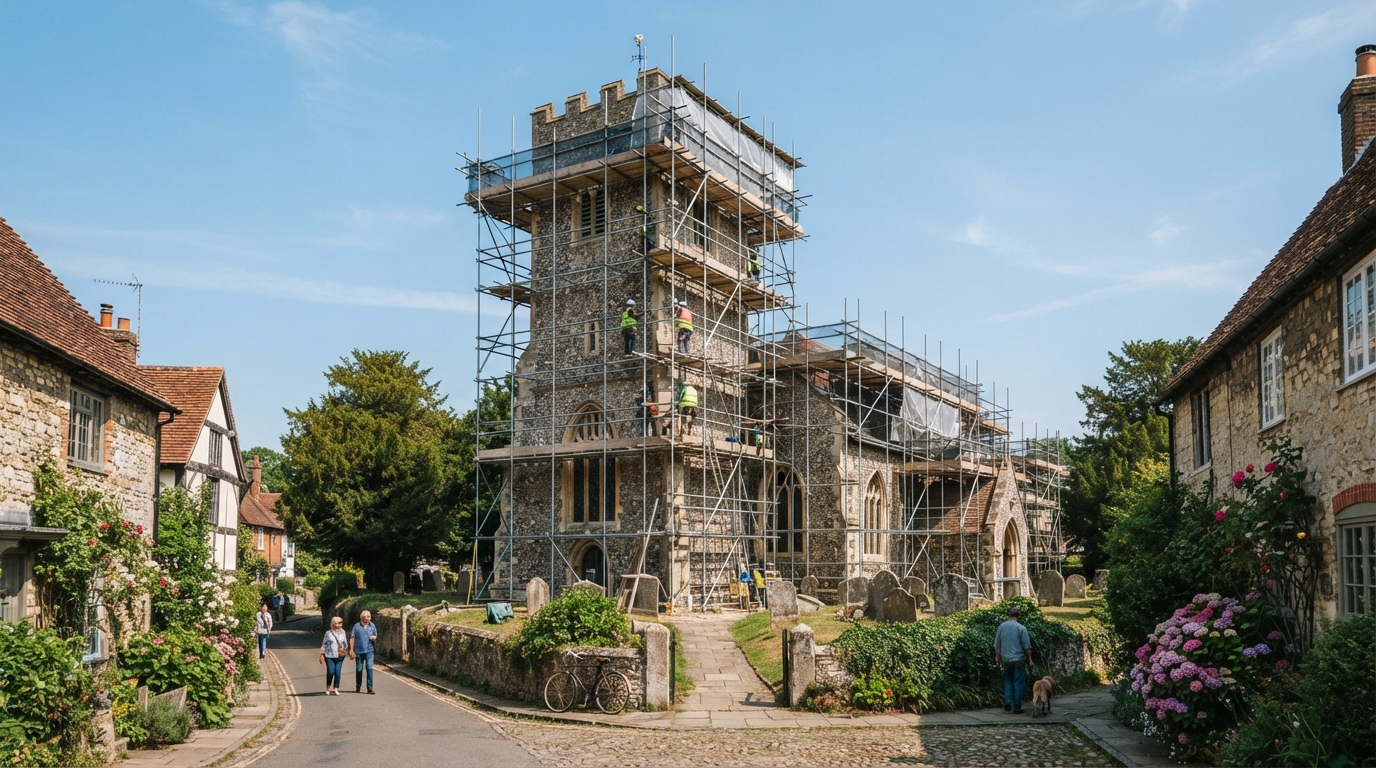
Why Hiring CITB Certified Scaffolders Ensures Maximum Project Safety
Understanding why hiring CITB certified scaffolders ensures maximum project safety isn’t just a box-ticking exercise. Over the 2020/21 to 2024/25 period, falls from a height caused an average of 38 deaths per year in Great Britain and represented 28% of all worker fatal injuries, making scaffolding competence one of the most critical safety decisions you can make on any construction project.
Key Takeaways
| Question | Answer |
|---|---|
| What does CITB certified mean for scaffolders? | CITB (Construction Industry Training Board) certification confirms that a scaffolder has completed recognised training and holds the competence required to erect, alter, and dismantle scaffolding safely and legally. |
| Is it a legal requirement to use trained scaffolders in the UK? | Yes. UK legislation including the Work at Height Regulations 2005 and CDM Regulations 2015 requires that scaffold work is carried out by competent persons. Meeting UK scaffolding regulations is a legal obligation, not just best practice. |
| How does CITB training reduce the risk of accidents on site? | CITB certified scaffolders are trained to identify hazards, use correct load ratings, follow safe erection sequences, and inspect structures to the required standard, directly reducing the likelihood of collapses or falls. |
| What accreditations should a scaffolding company hold? | Look for companies with CITB-trained staff holding CSCS cards, plus memberships with bodies such as the Scaffolding Association, SSIP, and SMAS, which confirm ongoing safety management standards. |
| Does hiring CITB certified scaffolders cost more? | Certified scaffolders may carry slightly higher day rates, but they reduce costs in the long run by preventing accidents, failed inspections, project delays, and liability claims. |
| Who are Kent Scaffolding and are their team CITB trained? | Yes. Kent Scaffolding, established in 2016 by Ryan Hall, employs scaffolders trained by the CITB who hold CSCS cards and are fully compliant with all current health and safety rules. |
| What UK standards do certified scaffolders follow? | CITB certified scaffolders work in line with NASC TG20:21 guidance, BS EN 12811, the Work at Height Regulations 2005, and the Health and Safety at Work Act 1974. |
What Does CITB Certification Actually Mean for Scaffolding Safety?
The CITB (Construction Industry Training Board) is the industry body responsible for setting training standards across the construction sector in the UK. When scaffolders are trained by the CITB, it means they have gone through a structured programme that covers safe erection methods, load calculations, hazard identification, and legal compliance.
This isn’t just a certificate on the wall. It directly shapes how a scaffolder behaves on site every single day.
CITB certified scaffolders also hold CSCS (Construction Skills Certification Scheme) cards, which provide visible, verifiable proof of their qualifications. When you hire a team that carries these cards, you know exactly what level of competence is walking through your site gate.
At Kent Scaffolding, all our scaffolders hold CSCS cards and have been trained by the CITB. That’s been the standard since Ryan Hall founded the company in 2016, and it hasn’t changed since.
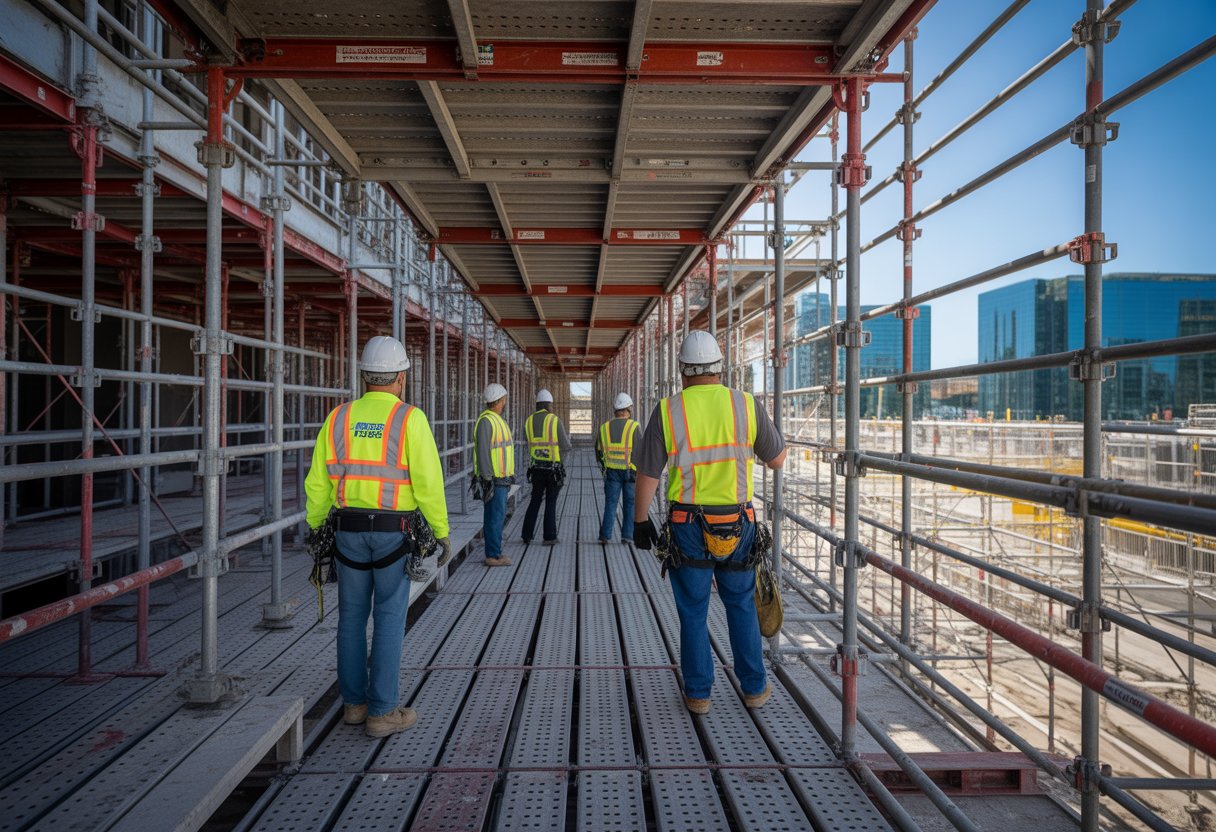
Why Hiring CITB Certified Scaffolders Ensures Maximum Project Safety Under UK Law
UK law is very clear on this point. The Work at Height Regulations 2005, the Health and Safety at Work Act 1974, and the CDM Regulations 2015 all require that anyone erecting, altering, or dismantling scaffolding is competent to do so.
Competence, in legal terms, means having the right training, knowledge, and experience for the specific type and complexity of scaffold involved. Hiring CITB certified scaffolders is one of the most straightforward ways to demonstrate that you have met this requirement.
If you cut corners here, the consequences can be serious. HSE inspections, improvement notices, prohibition orders, and prosecution are all real possibilities when scaffolding does not meet required standards.
Understanding the rules and regulations for commercial scaffolding in full is worth every minute of your time before a project begins.
-
Work at Height Regulations 2005: Requires all work at height to be properly planned, supervised, and carried out by competent people.
-
CDM Regulations 2015: Places duties on clients, designers, and contractors to manage health and safety throughout a project.
-
Health and Safety at Work Act 1974: Employers must ensure the safety of workers and others who may be affected by their activities.
-
NASC TG20:21: The current industry guidance document covering the design and use of tube and fitting scaffolding.
Did You Know?
The HSE states that every scaffold gang must contain a competent scaffolder who has received training for the type and complexity of scaffold being erected, altered, or dismantled.
Source: UK HSE (Scaffolds – HSE safety topic)
The Real-World Risks of Using Uncertified Scaffolders
It’s tempting to focus purely on price when choosing a scaffolding contractor. But using uncertified scaffolders carries risks that go well beyond a failed inspection.
Poorly erected scaffolding can collapse under load, shift in high winds, or create uneven working platforms that put operatives in serious danger. These aren’t hypothetical situations. They happen regularly on UK construction sites when proper training hasn’t been applied.

Beyond the human cost, the financial and legal fallout from a scaffolding accident can be enormous. Project shutdowns, HSE investigations, civil claims, and reputational damage can follow a single incident on site.
The risks of using unqualified scaffolders include:
-
Structural failures caused by incorrect load calculations or improper ties
-
Falls from height due to missing guardrails, boards, or access points
-
Failed statutory inspections, resulting in project delays
-
HSE enforcement action and potential prosecution
-
Invalidated insurance if scaffolding does not meet required standards
-
Damage to the building or adjacent property
Hiring CITB certified scaffolders is, quite simply, the most effective way to take all of these risks off the table.
How CITB Training Directly Translates to Safer Scaffold Structures
CITB training isn’t classroom theory. It’s practical, structured learning that covers everything from how to correctly position base plates and sole boards, through to how to attach ties, install guardrails, and inspect completed structures.
A CITB certified scaffolder knows what a good scaffold looks like. More importantly, they know what a dangerous one looks like, and they won’t leave a structure standing if it doesn’t meet the required standard.
This is particularly important on complex commercial projects. As our page on the importance of reliable scaffolding for commercial construction explains, the type and configuration of scaffolding used on large-scale sites directly affects both worker safety and project timelines.
Key safety competencies that CITB training covers include:
-
Safe erection sequences: Knowing the correct order of assembly reduces the risk of partial structure collapse during build.
-
Load capacity assessment: Certified scaffolders calculate what a platform can safely carry, preventing overloading.
-
Tie and anchor placement: Correct ties prevent the scaffold from moving away from the building under load or wind pressure.
-
Edge protection and toe boards: Preventing falls from platforms and materials falling onto those below.
-
Inspection procedures: Identifying defects, movement, or deterioration before they become dangerous.
-
Safe access and egress: Ensuring workers can get to and from working platforms without risk.

Why Hiring CITB Certified Scaffolders Ensures Maximum Project Safety Through Proper Inspections
Scaffold inspection is not optional. UK regulations require that scaffolding is inspected before first use, after any event that may have affected its stability (such as high winds or impact), and at regular intervals of no more than seven days.
Each inspection must be carried out by a competent person, and a written record must be kept. This is where CITB certification really earns its value. A certified scaffolder has the knowledge to identify what to look for and the experience to act on what they find.
Without that competence, an inspection is little more than a visual walk-around by someone who may not recognise the warning signs of a structure under stress.
Did You Know?
The HSE requires that scaffolding inspections be carried out by a competent person whose knowledge, training, and experience matches the type and complexity of the scaffold involved.
Source: UK HSE (Scaffolds – HSE safety topic)
All our scaffold systems at Kent Scaffolding meet all health and safety requirements, and inspections are carried out by our trained team as a standard part of every project. It’s not an add-on. It’s built into how we work.
Accreditations That Back Up CITB Certification: What to Look For
CITB training is the foundation, but the best scaffolding companies build on it with additional third-party accreditations that demonstrate ongoing commitment to safety management.
When assessing any scaffolding contractor, these are the quality and safety marks worth looking for:
| Accreditation | What It Confirms |
|---|---|
| CSCS Card | Individual scaffolder has the required training and qualifications for their role |
| Scaffolding Association Member | Company meets industry membership standards for quality and compliance |
| SSIP (Safety Schemes in Procurement) | Company has passed a recognised health and safety pre-qualification assessment |
| SMAS | Confirms compliance with health and safety management requirements for contractors |
| IEMA | Demonstrates commitment to environmental management alongside safety practices |
Kent Scaffolding holds all of these accreditations. They aren’t badges we display for appearances. They’re the result of consistently meeting the standards required to hold them.
Why CITB Certified Scaffolders Ensure Maximum Safety Across All Project Types
One of the most important points about CITB certification is that it isn’t one-size-fits-all. Training and competence requirements vary depending on the complexity and type of scaffold being used.
A basic independent tied scaffold for a domestic chimney repair requires a different level of competence than a birdcage scaffold inside an industrial building, a temporary roof structure, or a complex multi-level scaffold around a listed building.
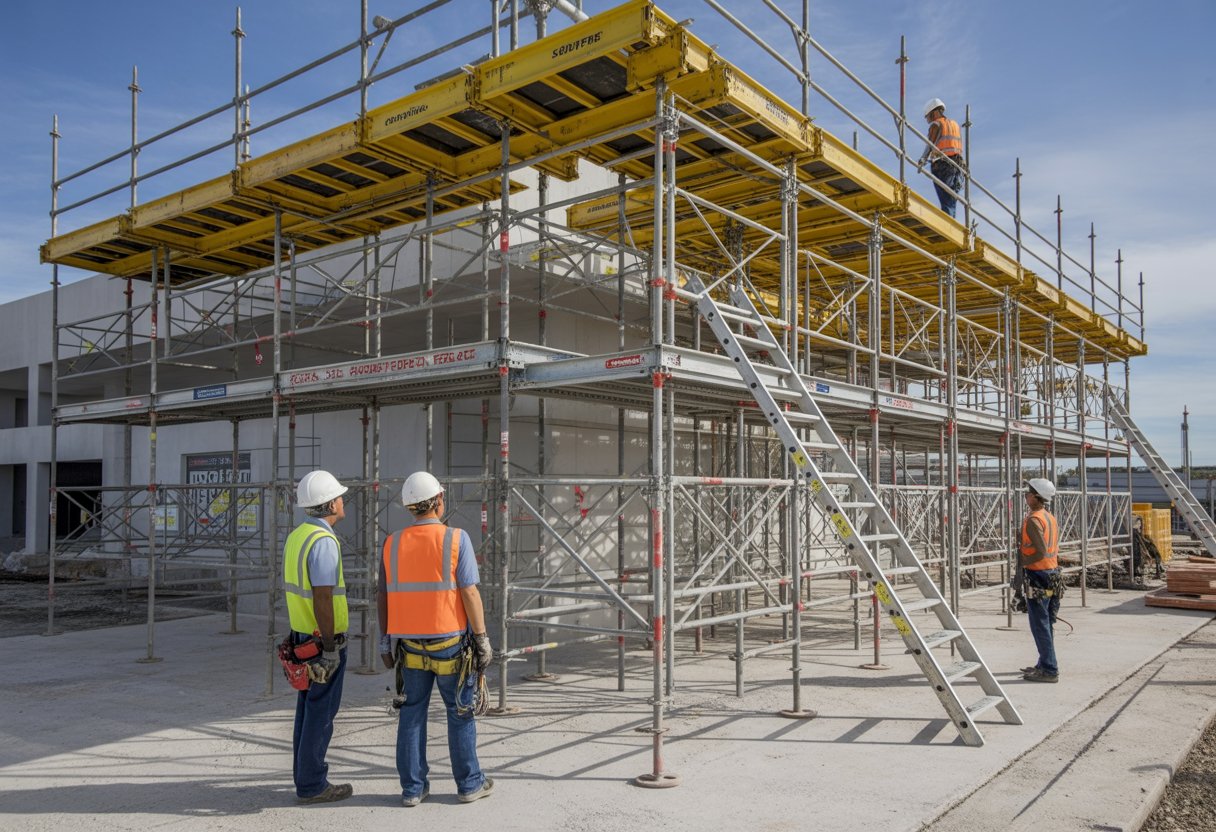
Our full range of scaffolding services includes temporary roofing, chimney scaffolding, hanging and access scaffolds, and drilling platforms. Each of these requires specific knowledge and training to execute safely, and that’s exactly what our CITB certified team brings to every job.
We’ve been doing this since 2016, and with over 30 years of combined experience in the team, we’ve handled projects of every type and scale across Kent, London, Surrey, Sussex, Essex, and Hampshire.
Choosing a CITB Certified Scaffolding Contractor: What Clients in Kent Should Look For
If you’re commissioning scaffolding work in Kent or the surrounding areas, the decision you make about your scaffolding contractor has a direct impact on project safety, timelines, and compliance.
Here’s a straightforward checklist to help you choose with confidence:
-
Ask to see CSCS cards: Every scaffolder on your site should be able to produce one. If they can’t, walk away.
-
Check for CITB-backed training: Ask specifically whether their team has been trained by the CITB for the type of scaffold your project requires.
-
Verify accreditations: SSIP, SMAS, and Scaffolding Association membership are all positive indicators of a well-run, compliant business.
-
Ask about inspection procedures: A good contractor will have a clear process for pre-use, post-event, and regular periodic inspections.
-
Check their insurance: Fully insured scaffolding contractors protect you as well as their own team.
-
Look for local knowledge: A contractor who knows your area, the ground conditions, and the local planning requirements is a genuine asset.
Local businesses across the region know exactly how to spot a reliable team. As our article on why local businesses trust Kent Scaffolding sets out, reputation, communication, and compliance are what keep clients coming back.
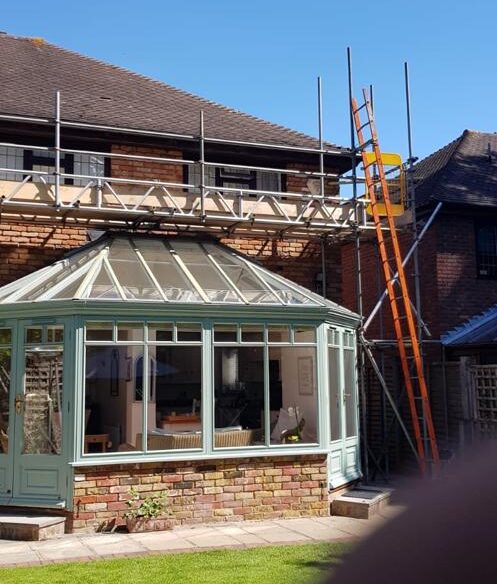
We cover a wide area from our Maidstone base, including Medway, Canterbury, Swanley, Tenterden, and across the wider South East. Whether you need scaffolding in Medway or a specialist structure further afield, our CITB trained team is ready to help.
How Hiring CITB Certified Scaffolders Ensures Maximum Project Safety in 2026 and Beyond
In 2026, the expectations around construction site safety continue to rise. Clients, principal contractors, and project managers all face greater scrutiny from regulators, insurers, and the public.
The scaffolding sector has seen consistent updates to guidance and working practices in recent years, and CITB training programmes are updated to reflect these changes. That means a CITB certified scaffolder in 2026 is working to the most current safety standards available.
Hiring a team without this certification isn’t just a safety risk. It’s a business risk. Insurance invalidation, project shutdowns, enforcement notices, and reputational damage are all potential consequences of scaffolding that doesn’t meet the required standard.
The investment in properly certified scaffolders pays for itself many times over when you consider the alternative.
“All our scaffolders hold CSCS cards, are trained by the CITB, and are fully compliant with all the latest health and safety rules. That’s not a selling point. That’s the minimum we hold ourselves to.”
Kent Scaffolding, established 2016
Safety First
The evidence is clear: why hiring CITB certified scaffolders ensures maximum project safety comes down to training, competence, compliance, and accountability. Falls from a height remain one of the most serious hazards on UK construction sites, and the single most effective defence against them is a qualified, trained scaffold team working to the required standard.
At Kent Scaffolding, every member of our team holds CSCS cards, has been trained by the CITB, and operates in full compliance with current UK health and safety regulations. We hold Scaffolding Association membership, SSIP, SMAS, and IEMA accreditations, and we back all of this up with a genuinely friendly, efficient service that aims to reduce your risk, your complexity, and your cost from the first call to the final dismantle.
We’ve been building long-term working relationships with clients across Kent and the wider South East since Ryan Hall founded the company in 2016, and that approach hasn’t changed. If you’d like a free, no-obligation quote or just want to talk through your project needs, just give us a call. We’re always happy to help.
Frequently Asked Questions
Why does hiring CITB certified scaffolders ensure maximum project safety?
CITB certified scaffolders have completed structured training covering safe erection methods, load calculations, hazard identification, and inspection procedures. This directly reduces the risk of collapses, falls from height, and regulatory failures on site, which is why hiring CITB certified scaffolders is widely regarded as essential for maximum project safety.
Is it a legal requirement in the UK to use CITB trained scaffolders?
UK law requires that scaffolding is erected, altered, and dismantled by competent persons under the Work at Height Regulations 2005 and CDM Regulations 2015. CITB training is the primary recognised route to demonstrating that competence, making it effectively a legal expectation on regulated construction sites.
What is the difference between a CSCS card and CITB certification for scaffolders?
CITB certification refers to the training programme that scaffolders complete to develop their skills and knowledge. A CSCS card is the physical credential that records this and other qualifications, providing on-site proof of competence that clients and principal contractors can verify.
How often does scaffolding need to be inspected and who can do it?
Scaffolding must be inspected before first use, after any event that may have affected its stability, and at intervals not exceeding seven days. The HSE requires these inspections to be carried out by a competent person whose training and experience match the complexity of the scaffold involved.
Can using an uncertified scaffolding company invalidate my insurance?
Yes, in many cases. If scaffolding does not meet the required UK safety standards and an incident occurs, insurers may refuse to pay out on claims related to the scaffold. Using CITB certified scaffolders who work to full compliance standards helps protect your insurance position as well as your workers.
Is hiring CITB certified scaffolders worth it for small domestic projects in 2026?
Absolutely. Even on smaller domestic projects such as chimney repairs, roof work, or extensions, the risks of working at height remain the same. Hiring CITB certified scaffolders ensures maximum safety for your home, your contractors, and any members of the public in the surrounding area, regardless of project scale.
What accreditations should I look for when hiring a scaffolding company in Kent?
Look for a company whose scaffolders hold CSCS cards and have been trained by the CITB, alongside company-level accreditations such as Scaffolding Association membership, SSIP, and SMAS. These together confirm that both the individual team members and the business as a whole meet recognised safety and quality standards.
Need Professional Scaffolding for Your Project?
Contact us now: